Where Were the Pillars of Heracles?

The Pillars of Heracles are frequently mentioned in ancient Greek mythology and even historical records. They were a geographical marker that had a mythological origin. They were known as ‘of Heracles’ because they were said to have been set up by him. Generally speaking, they marked the furthest reaches of Greek territory or activity. But were they always assigned to one specific location? Or were a number of different places known as the Pillars of Heracles? This article will examine the answers to these questions and others.
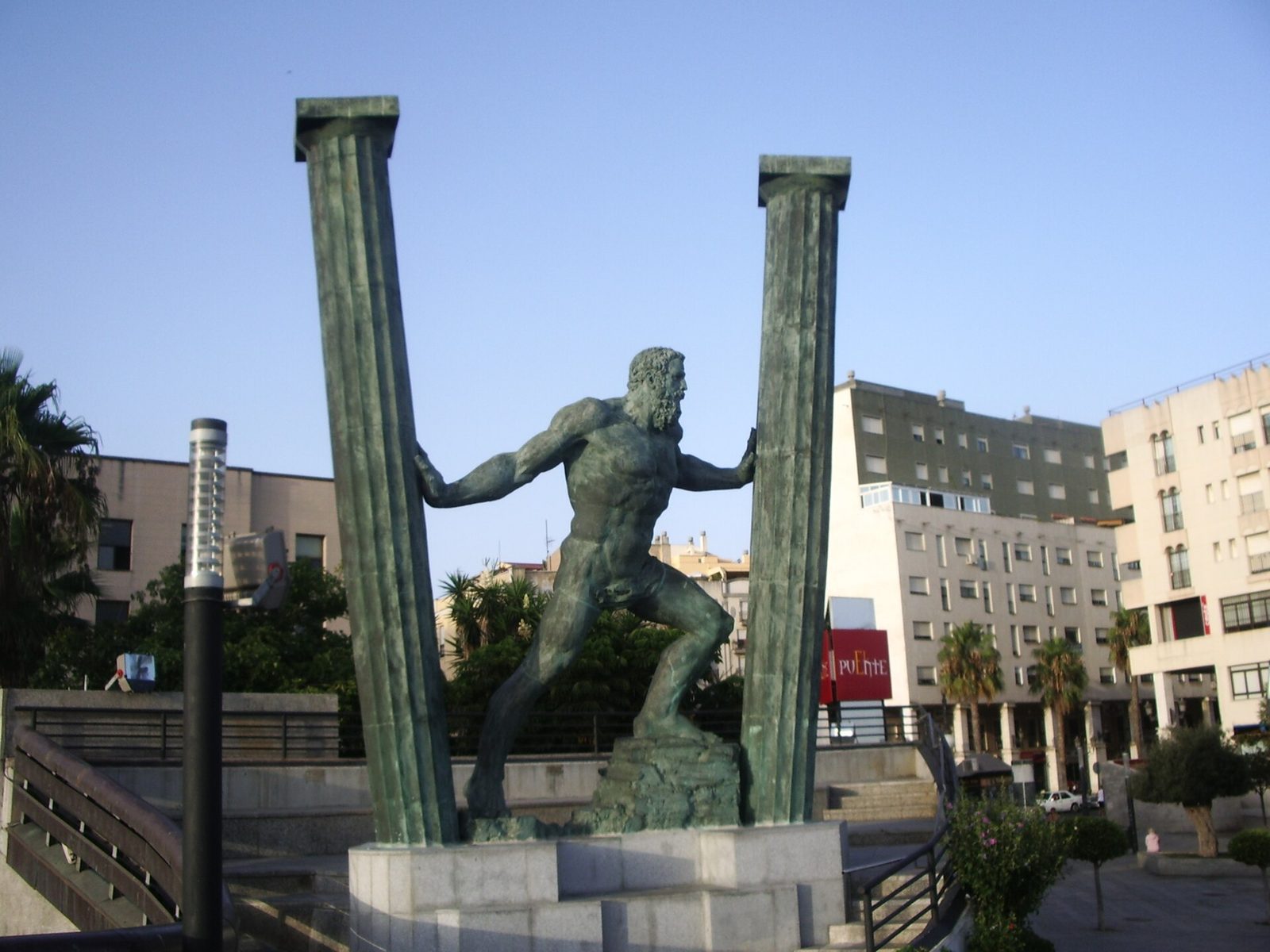
What Were the Pillars of Heracles?
The Pillars of Heracles are described in several different ways in the ancient Greek legends. Some records describe them as being two large mountains in close proximity to each other. Others describe them as being two literal pillars, and place them at or just outside a temple. Yet other records describe them as being figurative pillars associated with the sky.
Whatever they were viewed as physically being, they were invariably associated with Heracles, hence the name. However, what exactly Heracles had to do with them is not always consistent in the records. A near-constant feature in the legends about them appears to be that Heracles was responsible in some way for their creation, although even this is not always the case.
Land Formations
A rather extreme legend is found in the writings of Diodorus Siculus, a Greek historian of the first century BCE. Regarding Heracles at the entrance to the Mediterranean, he wrote:
“He decided to set up these pillars to commemorate his campaign. And since he wished to leave upon the ocean a monument which would be had in everlasting remembrance, he built out both the promontories, they say, to a great distance; consequently, whereas before that time a great space had stood between them, he now narrowed the passage.”
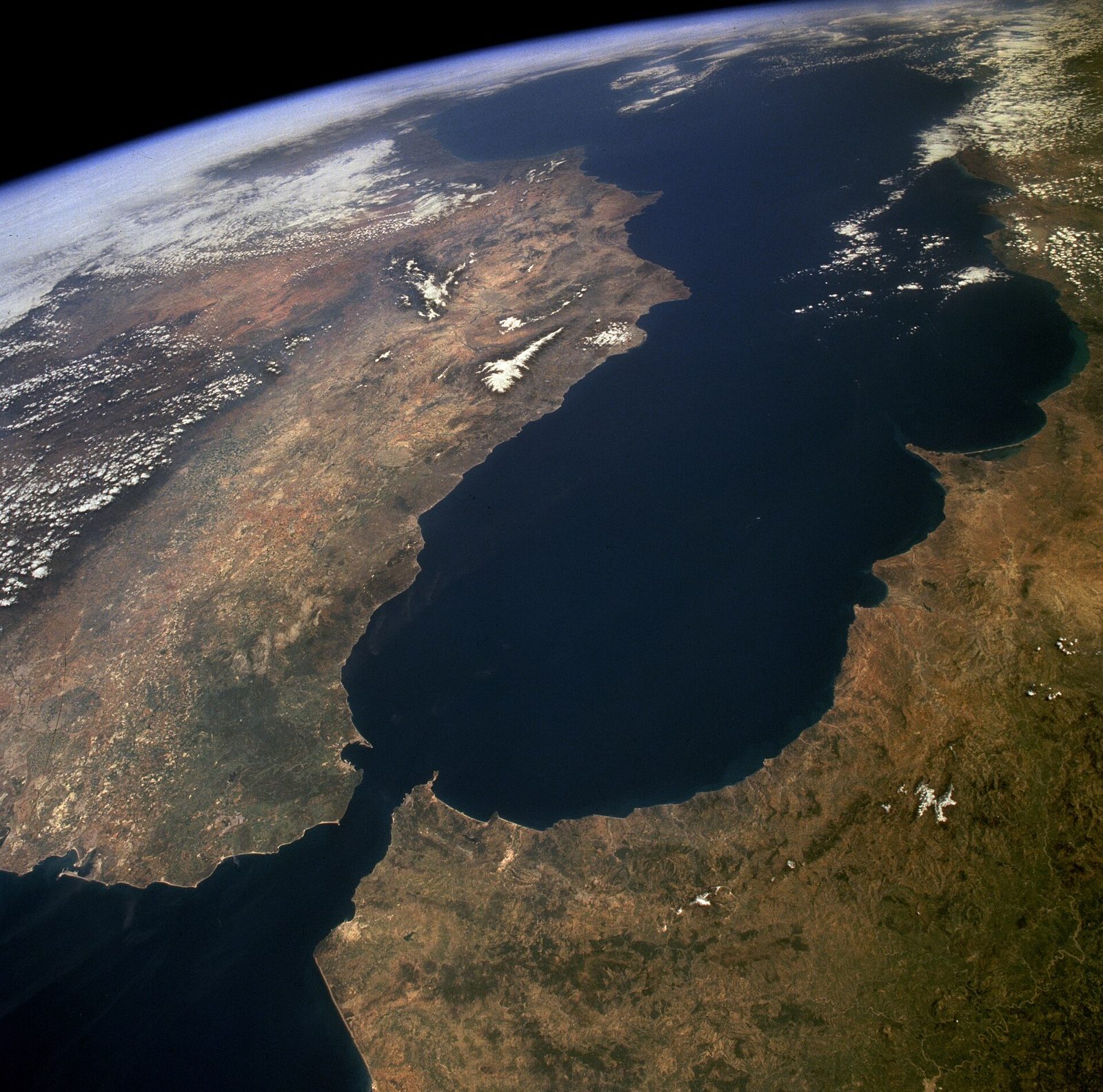
According to this legend, the Pillars of Heracles were not just mountains. They appear to be identified with the European and African headlands which form the Strait of Gibraltar.
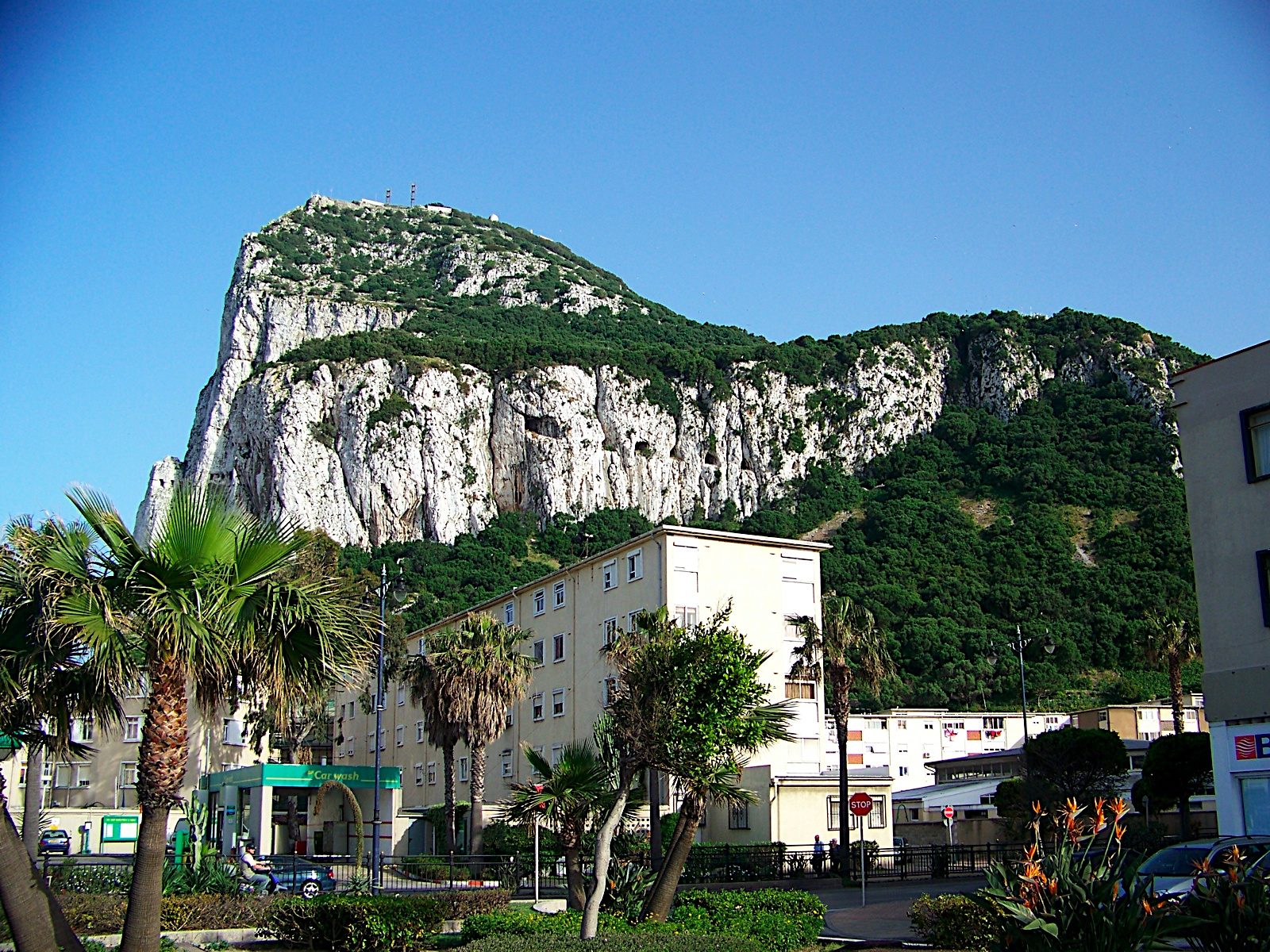
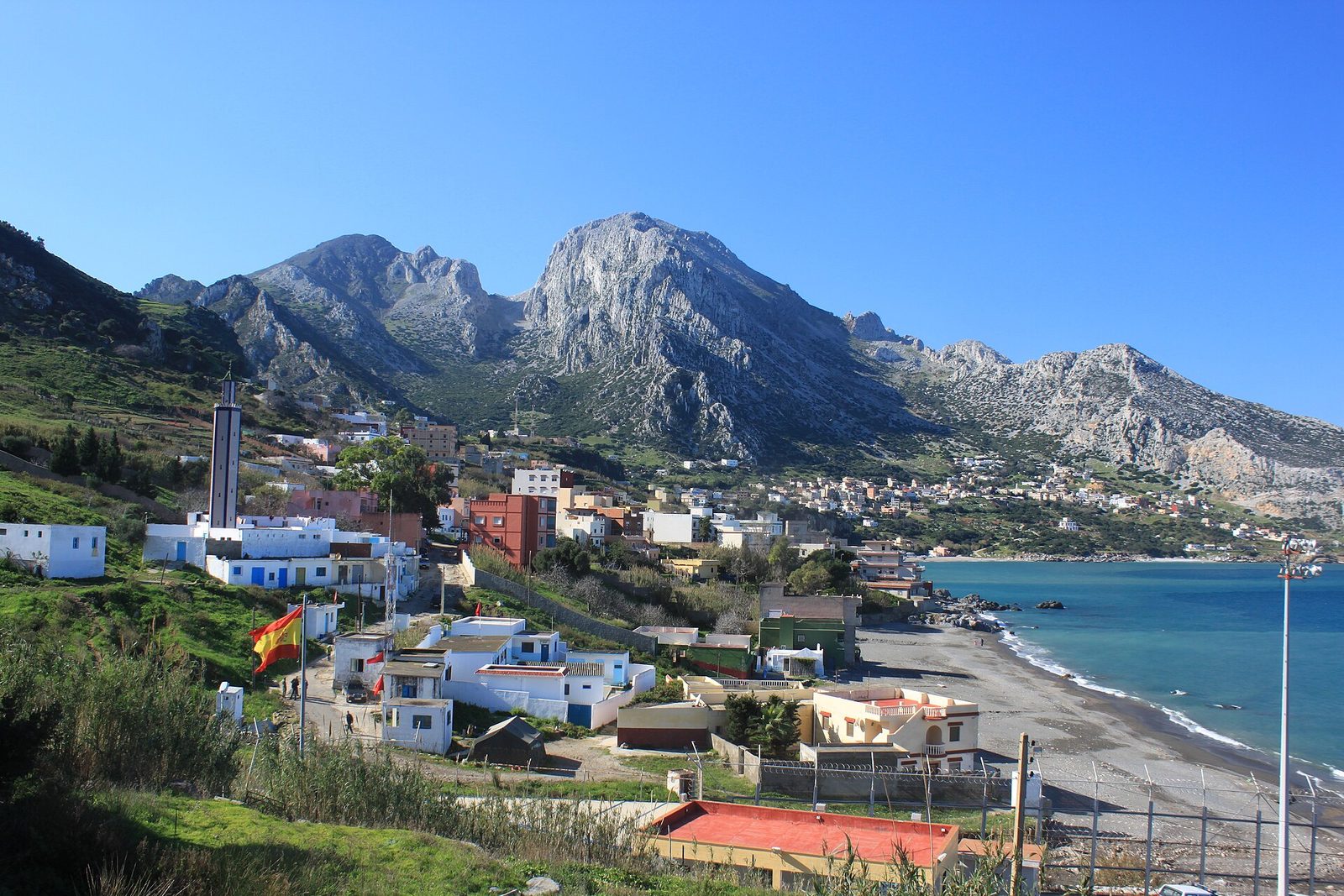
Most other records associating the Pillars of Heracles with land formations tend to identify them with individual mountains rather than entire headlands. Strabo, for example, identifies them with the mountains called Calpe and Abilyx by the Strait of Gibraltar. Today, these are usually identified with the Rock of Gibraltar on the European side and either Jebel Musa or Monte Hacho on the African side.
In contrast to Diodorus’ story about Heracles creating the headlands to narrow the entrance to the Mediterranean, it seems that the more common version was that Heracles split open a single mountain, forming two smaller ones either side of the Strait of Gibraltar. We see this, for instance, in the writings of Pliny the Elder and Seneca.
Literal Pillars
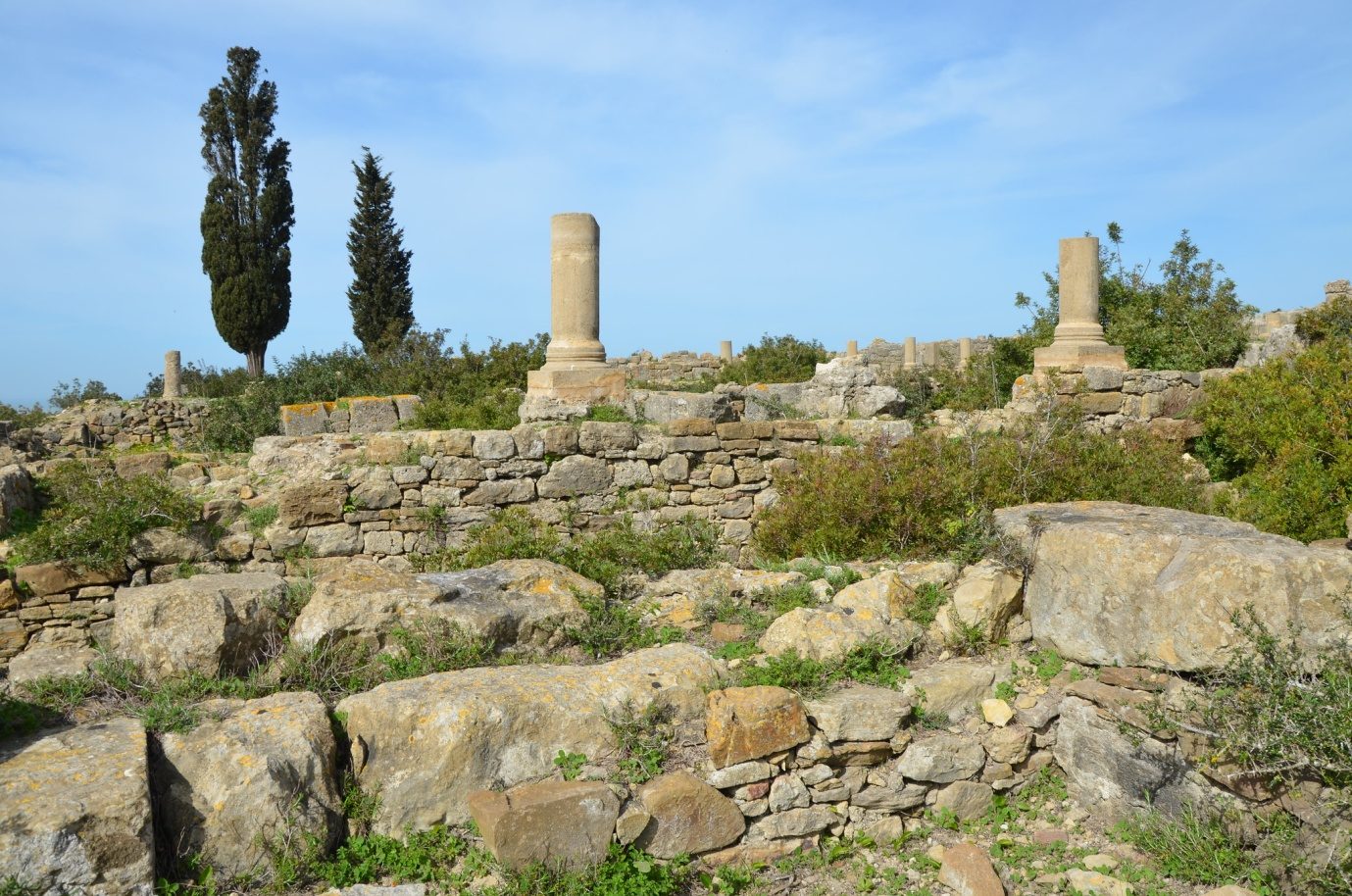
Another view was that the Pillars of Heracles were literal pillars. This view was particularly, although not exclusively, connected to the identification of Heracles with the Phoenician god Melqart. There was an extremely pervasive and consistent identification of Heracles with Melqart, which is seen at least as early as the writings of Herodotus.
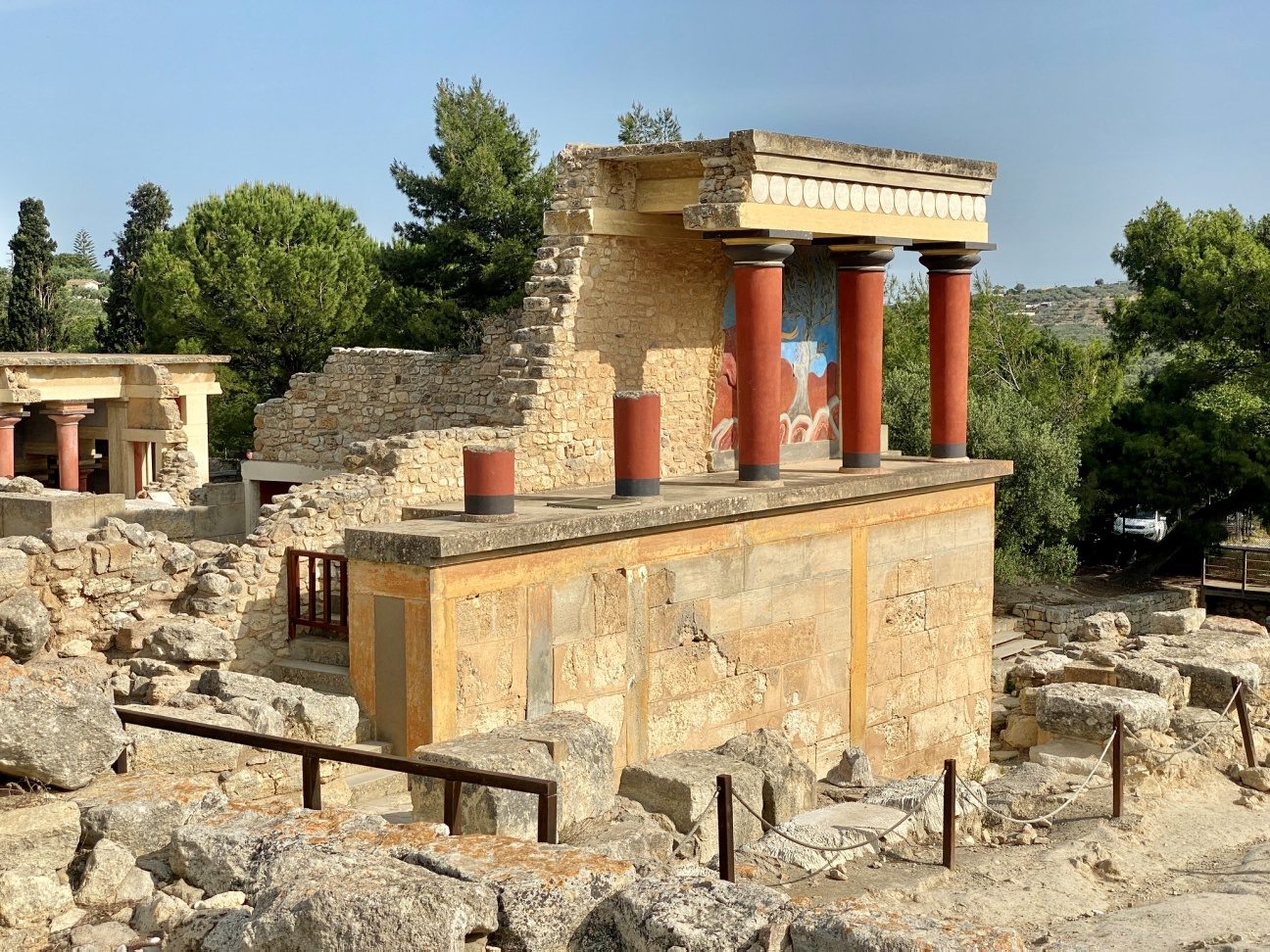
At the Temple of Melqart in Phoenicia, Herodotus recorded that there were two prominent pillars at the entrance. This appears to be confirmed by a depiction of Tyre on an ancient relief. We know that there was also a Temple of Melqart in Gadir (modern-day Cádiz), although no archaeological remains have been discovered.
Written evidence testifies to this temple in Gadir also having two prominent pillars at the entrance, and the evidence from the parallel temple in Tyre supports this notion. This being the case, and in view of the identification of Melqart with Heracles, one ancient viewpoint was that these were the Pillars of Heracles.
Strabo refers to this theory and mentions that Posidonius, a historian of the early first century BCE, considered this to be the most likely explanation.
One issue with this explanation is that there does not appear to be any direct reference to the pillars at the temple in Tyre as the Pillars of Heracles. If the term simply referred to pillars that were dedicated to Melqart, then it is strange that the prominent pillars at the prominent temple at Tyre were never referred to as such.
Figurative Pillars
Another point of view was that the Pillars of Heracles were figurative pillars associated with the sky. This is associated with Heracles’ encounter with Atlas, the Titan who was said to have held up the sky.
Regarding this tradition, one ancient source explains:
“Herodoros says that Herakles became a prophet and natural philosopher when he received from Atlas the Phrygian the pillars of the cosmos, the fable meaning that he received by instruction the knowledge of the heavenly bodies.”
Herodorus was a Greek writer who wrote his account of Heracles around 400 BCE. Therefore, this tradition is older than many others about the pillars. Although this passage does not specifically call them the Pillars of Heracles, it is evident that this is what they are meant to have been.
In this account, the Pillars of Heracles are not literal pillars. Rather, they represent the ‘knowledge of the heavenly bodies’. We can see that they were also associated with Atlas, the Titan who held up the sky in Greek mythology. This early association may well be the key to understanding what they originally were and were they were located.
The Purpose of the Pillars of Heracles
Something else that will help us to locate the Pillars of Heracles is understanding what their purpose was. There is an early source which makes the meaning of them very clear. Writing in the early fifth century BCE, the Greek poet Pindar used the Pillars of Heracles as an expression, rather than as a literal geographical marker. This helps us to understand what those pillars meant in a geographical sense.
In a poem praising the skills of an athlete named Theron, Pindar wrote:
“If water is best and gold is the most honored of all possessions, so now Theron reaches the farthest point by his own native excellence; he touches the Pillars of Heracles. Beyond that the wise cannot set foot; nor can the unskilled set foot beyond that.”
We see that the ‘Pillars of Heracles’ is used here as an expression denoting extreme limits. It is used in conjunction with the idea of the limits of human achievement. In fact, in another poem, Pindar refers to the geographical Pillars of Heracles and clearly tells us their purpose:
“The Pillars of Heracles, which that hero and god set up as famous witnesses to the furthest limits of seafaring.”
According to Pindar, the purpose of the Pillars of Heracles was to denote the ‘furthest limits of seafaring’.
Limits of Greek Territory
It is absolutely clear that the Pillars of Heracles were associated with limits. However, it is also clear from other records that this was not always related to the ‘limits of seafaring’. For example, Isocrates wrote about the Pillars of Heracles in the early fourth century BCE. Describing the activities of Heracles, he wrote:
“For he made an expedition against Troy… and with a small expedition, easily took the city by storm. After this, he put to death to a man all the princes of the tribes who dwelt along the shores of both continents… When he had done these things, he set up the Pillars of Heracles, as they are called, to be a trophy of victory over the barbarians, a monument to his own valour and the perils he had surmounted, and to mark the bounds of the territory of the Hellenes.”
According to this, the Pillars of Heracles were set up in the vicinity of Troy. Isocrates explicitly tells us the reason for these pillars. They were to ‘mark the bounds of the territory of the Hellenes’, that is, the Greeks.
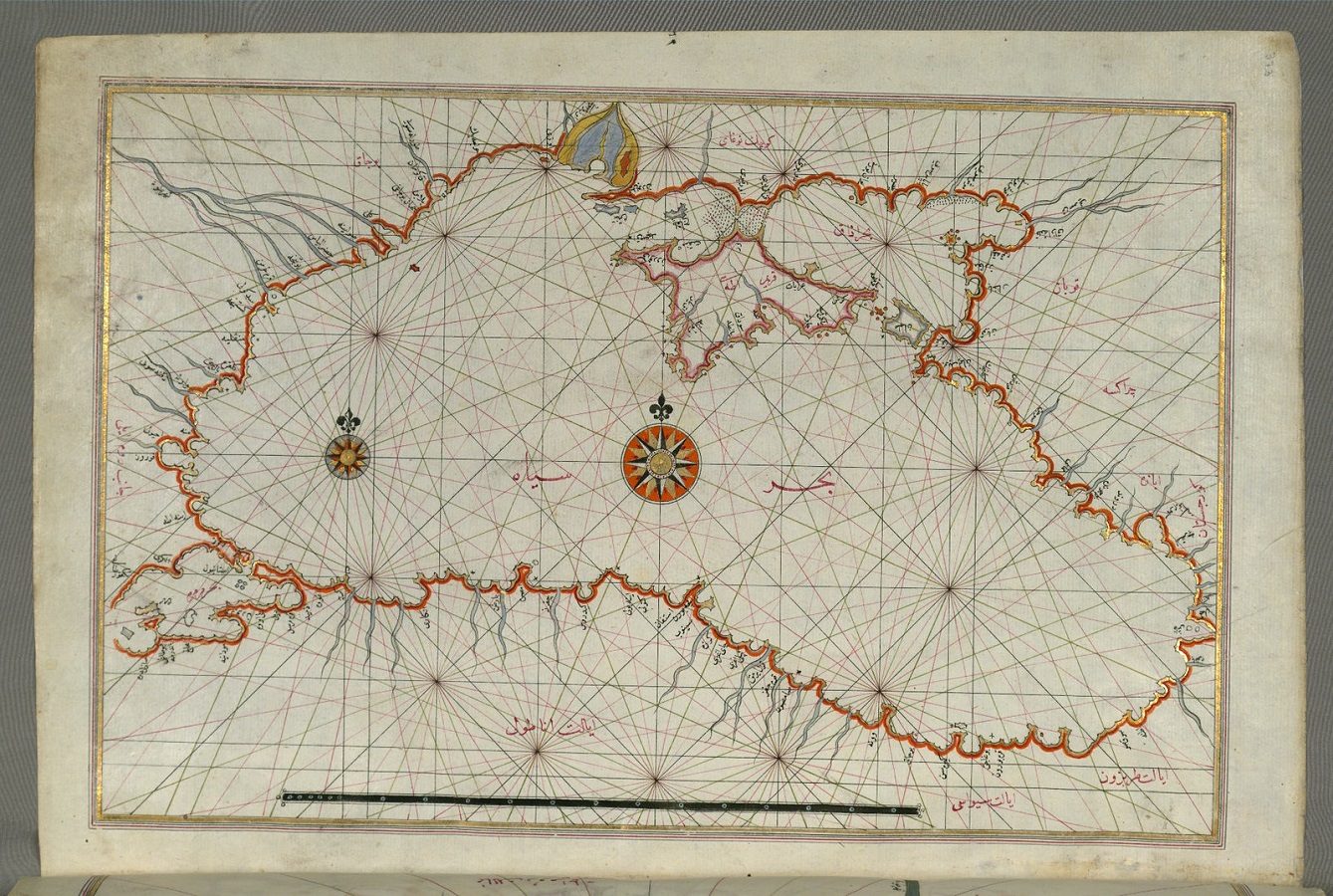
This is definitely about the boundaries of actual territory, not just the limits of seafaring. The Greeks had colonies all over the coast of the Black Sea by the time of Isocrates, and even in the mythological context of the Heroic Age, Heracles himself sailed all the way over to the eastern coast of the Black Sea with the Argonauts.
On the other hand, this legendary conquest of Troy and the surrounding barbarians appears to be the easternmost conquest of the Greeks at this point in the Heroic Age.
From this, we can see that the type of geographical limits denoted by the Pillars of Heracles were not always consistent. Sometimes they were used in the context of the limits of exploration, whereas at other times they were used for the limits of the Greeks’ own territory.
The Pillars of Atlas
So far, there are two important facts that we have discerned from some of the earliest sources. One of these is that the Pillars of Heracles were used to mark geographical limits of some kind. The second is that these pillars were associated from quite an early period with Atlas.
These two facts may well hold the answer to what the Pillars of Heracles were originally conceived of as being. Atlas himself was regularly associated with limits. He was also associated with Heracles, beyond just the record from Herodorus of him giving Heracles the pillars of the cosmos. With these facts in mind, it is well worth examining the earliest descriptions of Atlas in Greek mythology.
How Atlas Held Up the Sky
In the Odyssey, written by Homer in about the middle of the seventh century BCE, Atlas is described as “he who knows the depths of every sea and by himself holds the tall pillars that hold apart heaven and earth.”
In this very early description, we see that Atlas is described as holding the tall pillars that hold up the sky. Notice that this is somewhat different from the normal image of Atlas as holding up the sky with his arms or shoulders. This is found as early as Hesiod, a contemporary of Homer, who wrote:
“Atlas through hard constraint upholds the wide heaven with unwearying head and arms, standing at the borders of the earth before the clear-voiced Hesperides.”
By comparing these two contemporary descriptions of Atlas, it appears that his role as the supporter of the sky was conceived of as being associated with pillars, perhaps by holding them directly, with the sky resting atop. Of course, it is also possible that different writers imagined his function in slightly different ways.
In any case, this association between Atlas and pillars appears in later records too. Aeschylus, a Greek poet of the fifth century BCE, described Atlas as bearing the pillar of heaven and earth upon his shoulders. It appears that this idea of one or more pillars was eventually forgotten, but this early evidence shows that this concept originally existed.
Giving the Pillars to Heracles
Famously, Heracles temporarily took over Atlas’ role as the supported of heaven. This occurred during Heracles’ twelve labours. There are not many early written sources for this event, which might make this seem irrelevant to the origin of the Pillars of Heracles. It seems that the earliest written source is Diodorus Siculus, from the first century BCE.
However, this mythological event appears on a vase dated to c. 500 BCE. This demonstrates that this myth goes back much further than the earliest written accounts of it. In fact, this would appear to be contemporary with the earliest reference to the Pillars of Heracles, which is from the writings of Hecataeus.
Most sources do not specifically speak of Heracles as bearing the pillar, or pillars, of heaven from Atlas. But as we have just seen, these heavenly pillars were forgotten relatively early. Nonetheless, this concept of Atlas supporting the sky by means of pillars, and the concept of Heracles temporarily taking over Atlas’ burden, would logically mean that the earliest version of this myth may well have described Heracles as supporting the pillars of heaven.
In fact, this form of the myth is preserved through the writings of Herodorus in c. 400 BCE. As we saw previously, he referred to Heracles as ‘receiving the pillars of the cosmos’ from Atlas.
In that quotation provided earlier, we saw that this myth was interpreted in the euhemeristic way of Heracles receiving knowledge of the science of astronomy. Diodorus Siculus interpreted the myth of Heracles taking over Atlas’ burden in this same way, demonstrating that the myth recorded by Herodorus is definitely about that event, and not some other occasion in Heracles’ life.
An Explanation for the Pillars of Heracles
It would appear, then, that the earliest evidence strongly indicates that the concept of the Pillars of Heracles originally came from the pillars of heaven which supported the sky. While most of the time being supported by Atlas, their being supported for a time by Heracles was a particularly notable event.
Unlike the Titan Atlas, Heracles was a mortal demigod. He was the only mortal – in fact, the only person at all – to hold up the sky in Atlas’ place. Therefore, due to this absolutely momentous feat, these pillars of heaven came to be known as the Pillars of Heracles.
This also explains why the Pillars of Heracles were associated with limits. Atlas himself is depicted as supporting the sky right at the limit of the earth. In the quotation from the Odyssey provided earlier, for example, Atlas is described as ‘standing at the borders of the earth before the clear-voiced Hesperides’.
Where Was Atlas Supporting the Sky?
Now that we have a likely explanation for what the Pillars of Heracles originally were, we can understand much better the issue of where they were supposed to have been. Both Atlas and the Pillars of Heracles were associated with limits, the ‘borders of the earth’ or the ‘furthest limits of seafaring’. But where exactly were these limits originally?
Hesiod describes Atlas as ‘standing at the borders of the earth before the clear-voiced Hesperides’. This is a very useful piece of information. Where were the Hesperides? Their very name places them in the west. The evidence from the very earliest sources indicates that they were originally placed just off the western coast of Greece itself.
Atlas and the Pillars of Heracles in the Near West
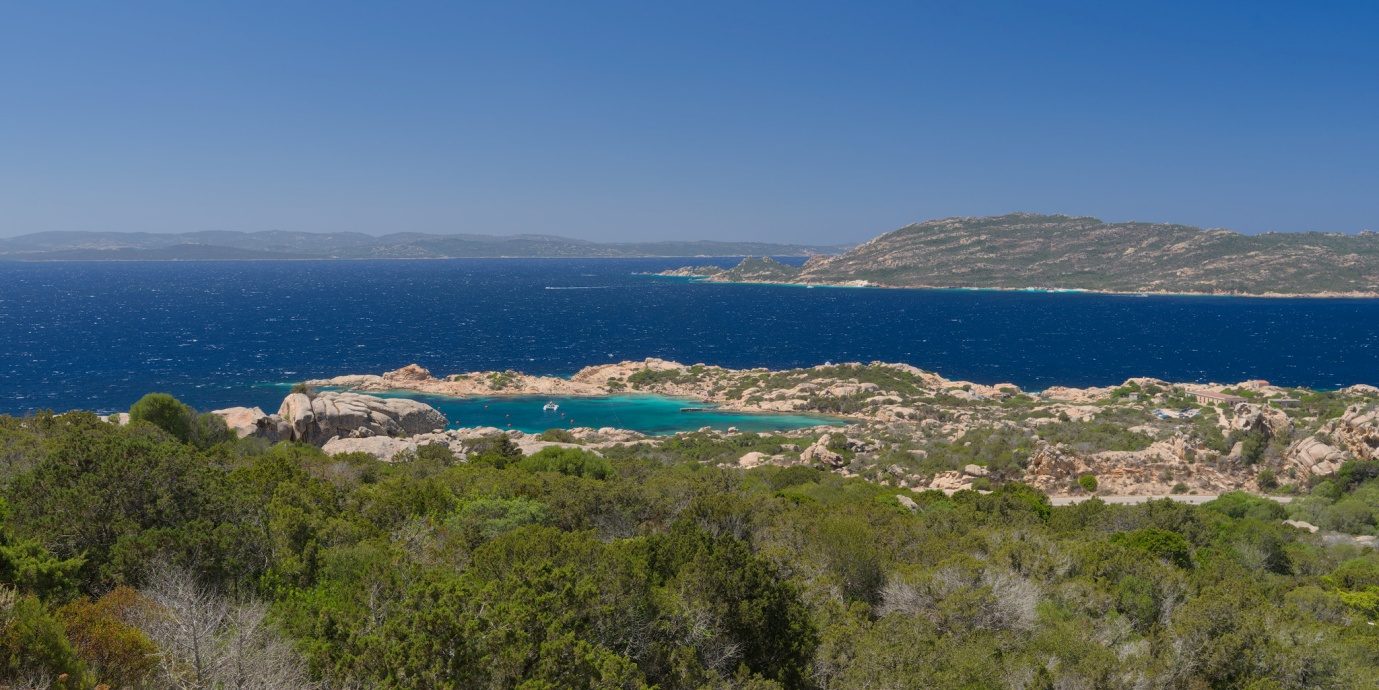
One of the islands of the Hesperides was Erytheia, from where Heracles stole the sacred cattle of Geryon. The sun god Helios was also said to have kept his cattle on that island for at least a time. With this in mind, it is significant that Tim Severin’s convincing discovery of the true route of the Odyssey identifies the island of Thrinacia, on which there were the sacred cattle of Helios, with Meganisi.
The island of Meganisi is just off the western coast of Greece, near Thesprotia. Significantly, the early Greek writer Hecataeus wrote, in the late sixth century BCE, that Erytheia was in the region of Ambracia and Amphilochi. This is the mainland area of Greece just opposite the island of Meganisi.
This early evidence from the route in the Odyssey and Hecataeus’ direct claim about Erytheia strongly supports the notion that Erytheia, and thus the other Hesperides, were originally imagined to have been on the western coast of Greece in the region of Thesprotia.
Since Atlas is placed by Hesiod in the land of the Hesperides, this would mean that Atlas was imagined to have been on the western coast of Greece. Although this might seem surprising, this is consistent with the idea of a more primitive belief system, from the days before the Greeks expanded far to the west (not that Homer wrote before then, but that this tradition about Atlas originates from before then).
This conclusion is directly supported by the Encyclopedia Britannica, which explains:
“Atlas seems to have been a marine creature who supported the pillars that held heaven and earth apart. These were thought to rest in the sea immediately beyond the most western horizon.”
A number of sources have Heracles setting up his pillars at about the time of his adventure in the land of the Hesperides. On the basis of the abovementioned evidence, researcher Oliver D Smith concluded, independent of the connection with Atlas, that the Pillars of Heracles were originally in this region of western Greece.
Atlas and the Pillars of Heracles in the Far West
As Greek mythological tradition evolved, Atlas and the land of the Hesperides were pushed further west. Before long, Atlas became strongly associated with the large mountains of North West Africa. As early as Herodotus in the mid-fifth century BCE, Atlas was associated with this region.
Clearly not by coincidence, the Pillars of Heracles were also moved to the far west before long. This location appears to have been established by as early as Hecataeus, writing near the end of the sixth century BCE. It is also found in Pindar, writing in c. 475 BCE. In the quotation provided earlier, about Heracles establishing the pillars as a marker of the furthest limits of seafaring, Pindar referred to the ‘trackless sea’ which is difficult to cross beyond the pillars.
This appears to correspond to something that Pindar wrote in another poem at about the same time, in which he wrote:
“Beyond Gadeira towards the western darkness there is no passage.”
Gadeira is Gadir, or modern-day Cádiz in southern Spain. The correspondence between the ‘trackless sea’ which is difficult to cross and the sea beyond Gadir having ‘no passage’ strongly indicates that he is referring to the same location. Thus, he appears to have placed the Pillars of Heracles at the Strait of Gibraltar.
Numerous later writers supported this location for the Pillars of Heracles, and this tradition continues firmly down to this day.
Other Locations for the Pillars of Heracles
However, in view of what the Pillars of Heracles represented – regardless of their likely connection to the pillars of heaven supported by Atlas – it is profoundly logical that we should expect to see them being placed in other distant places. There is no inherent reason why they should have only denoted the extreme west.
Pillars of Heracles to the East
In fact, we have already seen evidence for this. Recall how Isocrates described the fact that Heracles set up pillars in the vicinity of Troy after conquering the tribes in that region, so as to mark the bounds of Greek territory. This is an unambiguous reference to Pillars of Heracles in the distant east.
These do complement the Pillars of Heracles to the west in an obvious sense, although they appear to denote different types of limits (limits of Greek activity in one case, and limits of Greek territory in another).
In any case, we can see clear evidence that the Pillars of Heracles were used to mark western and eastern limits. Thus, it would be logical to see references to the Pillars of Heracles in the northern and southern limits as well, whether they be limits of activity or of territory.
Pillars of Heracles to the North
There is, in fact, a direct reference to Pillars of Heracles in the far north. This reference comes from Tacitus, the Roman writer of the late-first, early-second century CE. Describing the area close to where the Rhine flows into the North Sea, he wrote:
“We have even explored the ocean itself on that side; and fame reports that columns of Hercules are still remaining on that coast.”
Obviously, this does not have anything to do with the limit of Greek territory (for one thing, this was the era of the Roman Empire, having long surpassed Greece). Yet, it was certainly a location to the extreme north and was a limit in a sense. In fact, Tacitus immediately went on to say:
“The attempt of Drusus Germanicus to make discoveries in these parts was sufficiently daring; but the ocean opposed any further inquiry into itself and Hercules. After a while no one renewed the attempt.”
From this passage, we see that the North Sea was certainly a limit of activity to the Romans. Therefore, the placement of the Pillars of Heracles at the mouth of the Rhine is clearly an example of these figurative pillars being used to represent a limit in another cardinal direction.
A Northern Location for Atlas
There is also evidence from within Greek tradition for a northern location for the Pillars of Heracles, dating from about the same era as Tacitus’ reference. This evidence comes from the Bibliotheca of Pseudo-Apollodorus, dated to c. 100 CE. Referring to the special apples from the land of the Hesperides, this source states:
“These apples were not, as some maintain, in Libya, but rather were with Atlas among the Hyperboreans.”
The Hyperboreans were inhabitants to the far north from the point of view of the Greeks. Their very name means ‘Beyond Boreas’, the latter name being the god of the north wind, usually placed in Thrace. This brief passage shows how Atlas, the supporter of the pillars of heaven, was not always placed in the far west. Here, he is placed in the distant north.
As well as this general point, this tradition also includes a reference to Heracles specifically. The same source, the Bibliotheca, reads:
“Prometheus advised Heracles not to go after the apples himself, but rather to relieve Atlas of the celestial sphere and dispatch him. So when Heracles reached Atlas among the Hyperboreans, he remembered Prometheus’ advice and took over the sphere.”
This explicitly places Heracles’ feat of holding up the sky in the land of the Hyperboreans, which was to the far north.
Pillars of Heracles to the South
So far, we have seen clear evidence of Pillars of Heracles to the west, east, and north. For at least two of these occasions, there is likewise evidence of Atlas being associated with those locations in connection with Heracles.
With these facts in mind, can we identify evidence for southern Pillars of Heracles, perhaps associated with a southern location for Atlas as well? Indeed we can. Regarding the Pillars of Heracles themselves, there is a very interesting comment from Aristotle of the fourth century BCE.
The Pillars of Briareus
According to Aristotle, the Pillars of Heracles were formerly known as the Pillars of Briareus. Now, who was Briareus? He was a fairly obscure figure from Greek mythology, which is actually a good thing because it means that he is not associated with many different locations.
In Hesiod’s Thegony, written in the seventh century BCE and one of the very earliest sources we have for this subject, we find the interesting passage regarding the imprisoning of the Titans in Tartarus:
“The Titan gods are hidden under misty gloom, in a dank place where are the ends of the huge earth. And they may not go out; for Poseidon fixed gates of bronze upon it, and a wall runs all round it on every side. There Gyes and Cottus and great-souled Obriareus [Briareus] live, trusty warders [prison guards] of Zeus.”
In this passage, Briareus is one of the guards of Tartarus, keeping the Titans trapped down there. This is his permanent location, where he lives. In line with the Pillars of Heracles originally being called the Pillars of Briareus, the location in this passage is called ‘the ends of the huge earth’. So Briareus’ location is associated with an important and definite limit of territory.
The Entrance to Tartarus
With this fact in mind, it is crucial to establish where the entrance to Tartarus was believed to have been. Fortunately, the answer to this is clear. There was a specific cave on Cape Taenarum, the western headland of the Gulf of Laconia, in southern Greece which was identified as the entrance to the underworld. Therefore, Briareus and his pillars were logically placed there on that cape.
How does Cape Taenarum fit the idea of this being the ‘ends of the earth’? Well, Cape Taenarum is an uninviting headland which extends prominently out into the sea, being the very southernmost point of mainland Greece. When looking south, Cape Taenarum is absolutely ‘the ends of the earth’ in terms of Greek territory.
Known as the Pillars of Heracles
Is there a specific reason why the Pillars of Briareus at Cape Taenarum would come to be known as the Pillars of Heracles? As it happens, yes, there is a very obvious reason for this. During his twelve labours, Heracles had to descend into the underworld. To do this, he entered the cave at Cape Taenarum.
Thus, Heracles achieved the impressive feat of being one of the very few mortals to have ever descended into Hades and returned. It would only have been appropriate to refer to the Pillars of Briareus as the Pillars of Heracles in honour of his achievement.
Atlas at the Entrance to Tartarus
The conclusion that Cape Taenarum was one site of the Pillars of Heracles is also supported by evidence concerning Atlas. Immediately after the passage about Briareus guarding the Titans in Tartarus in Hesiod’s Thegony, the description of Tartarus goes on.
“And there, all in their order, are the sources and ends of gloomy earth and misty Tartarus and the unfruitful sea and starry heaven, loathsome and dank, which even the gods abhor. There stands the awful home of murky Night wrapped in dark clouds. In front of it the son of Iapetus [Atlas] stands immovably upholding the wide heaven upon his head and unwearying hands, where Night and Day draw near and greet one another as they pass the great threshold of bronze.”
This awful place is the location at which Atlas, the ‘son of Iapetus’, holds up the heaven. While contradicting Hesiod’s statement placing Atlas in the west, this is simply a reflection of the evident fact that Atlas held up the heaven at all four cardinal points of the earth.
Crucially, this description places him at the entrance to the underworld, which, as we have seen, was Cape Taenarum. The gloomy and inhospitable nature of this area is consistent with the real-world geography. Tim Severin described it as ‘one of the bleakest, most forbidding parts of Greece’.
The Odyssey refers to the land of the Laestrygonians as being a land where ‘the paths of day and night are close together’. Severin convincingly identifies this location as Cape Taenarum based on his recreation of the route of the Odyssey. This adds support to the conclusion that Hesiod was referring to this spot, since he stated that ‘Night and Day draw near and greet one another’.
This being the case, Cape Taenarum would obviously be another location where the pillars of heaven, with Atlas supporting them, were imagined to have been.
Conclusion
In conclusion, we can see that the Pillars of Heracles almost certainly developed from the notion of pillars supporting the sky. It appears that these pillars were associated with the Titan Atlas and his burden of supporting the sky in early Greek mythology, but they were forgotten fairly early on. They came to be known as Pillars of Heracles very probably due to the myth of Heracles taking Atlas’ place briefly, being the only mortal to ever hold up the sky. This name would also have been encouraged by Heracles’ journey to the underworld at the location of the southern pillars of heaven, also called the Pillars of Briareus. Due to the nature of these pillars, both Atlas himself and the Pillars of Heracles were associated with locations far to the north, east, south and west. Sometimes they were used to denote the limits of Greek activity, whereas at other times they were used to denote the limits of Greek territory.
Sources
Smith, Oliver D., In Search of the Pillars of Heracles, 2019
Severin, Tim, The Ulysses Voyage, 1987
https://www.theoi.com/Kosmos/Erytheia.html
https://atlantipedia.ie/samples/pillars-of-herakles-revised/
https://www.arcus-atlantis.org.uk/atlantis/where-is-atlantis.html