Where Was the World-Encircling River Oceanus Believed to Have Been?

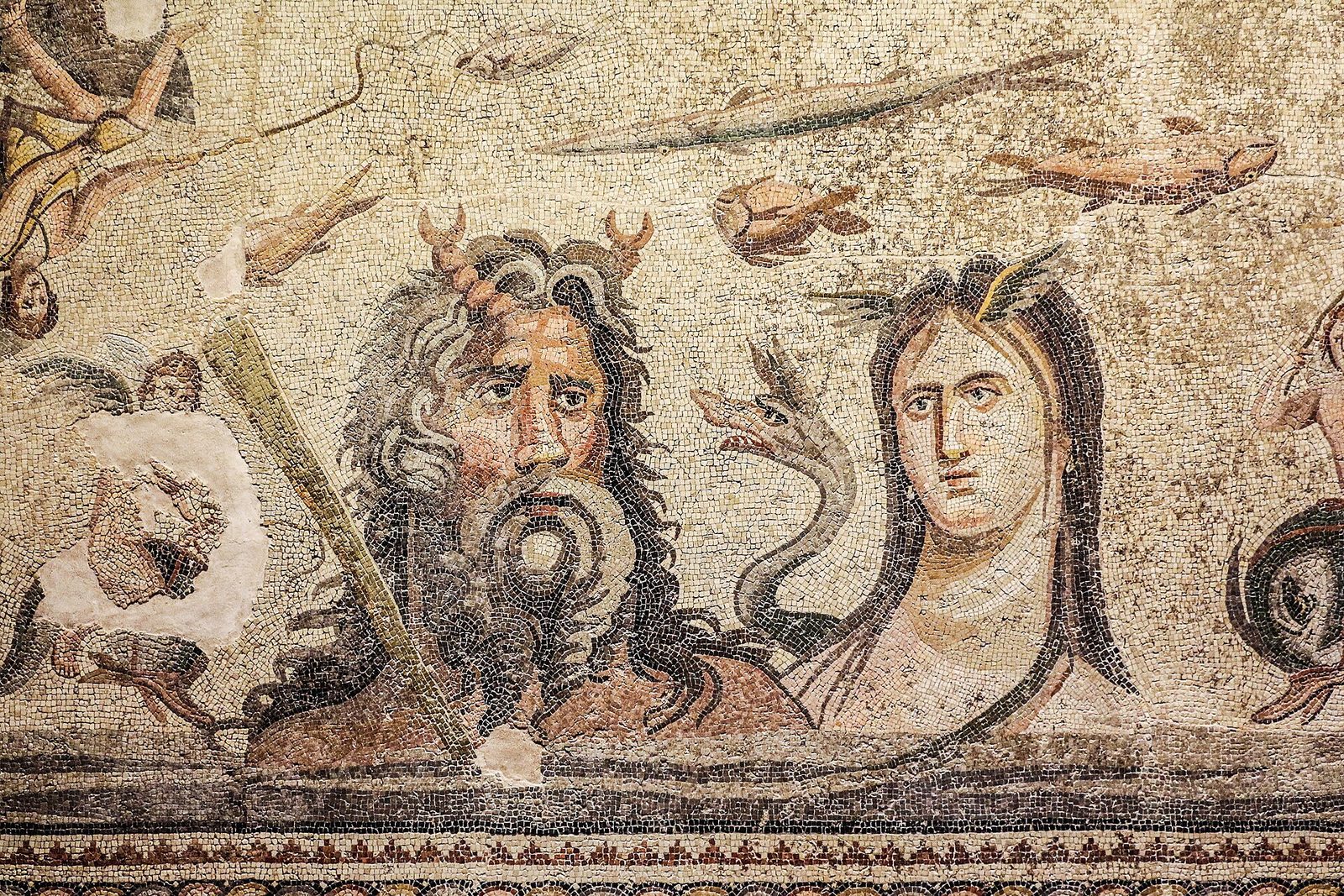
In ancient Greek mythology, Oceanus was a Titan who personified the world-encircling river. As a being, Oceanus is an interesting character, since he was a Titan that was not imprisoned by the Olympian gods after the Titanomachy. According to their perspective, he was still active in the time of the ancient Greeks. This may simply be because the world-encircling river, which he personified, was a still-existing part of reality as the Greek knew it. But where exactly was this world-encircling river supposed to have been. Was it identified with a real body of water, or was it placed outside the realm of the known world of the Greeks, indicating that they believed it literally encircled the whole earth?
What Was Oceanus?
Oceanus is mentioned in some of the earliest Greek literature, such as the poems of Homer and Hesiod of the seventh century BCE. He appears as both a Titan and as a body of water. As the latter, Oceanus was conceived as being an enormous river which flowed around the entire earth, which the Greeks viewed as flat.
It is true that Greek intellectuals were aware, from the time of Pythagoras onwards (sixth century BCE), that the earth is a globe. However, the understanding of Greek intellectuals evidently had little impact on mythology and poetry. In any case, Homer’s and Hesiod’s references to Oceanus come from before Pythagoras.
One clear example of how the ancient Greeks viewed Oceanus is Homer’s description of Achilles’ shield in the Iliad. On the shield were images of people, land, and cities. Right around the rim of the shield was the river Oceanus.
Freshwater or Saltwater?
According to some modern sources, Oceanus was specifically a fresh-water river. This fed all the rivers and streams in the world. However, the reality is that Oceanus was understood to be the source of all bodies of water, both freshwater and saltwater alike. This is made clear by the following line from the Iliad:
“Deep-flowing Ocean, from whom all rivers flow and every sea, and all the springs and deep wells.”
Therefore, whether Oceanus itself was imagined to have been flowing with fresh water or salt water is unclear. It is entirely possible that the ancient Greeks simply did not reason on that issue too much.
Where Was Oceanus Placed?
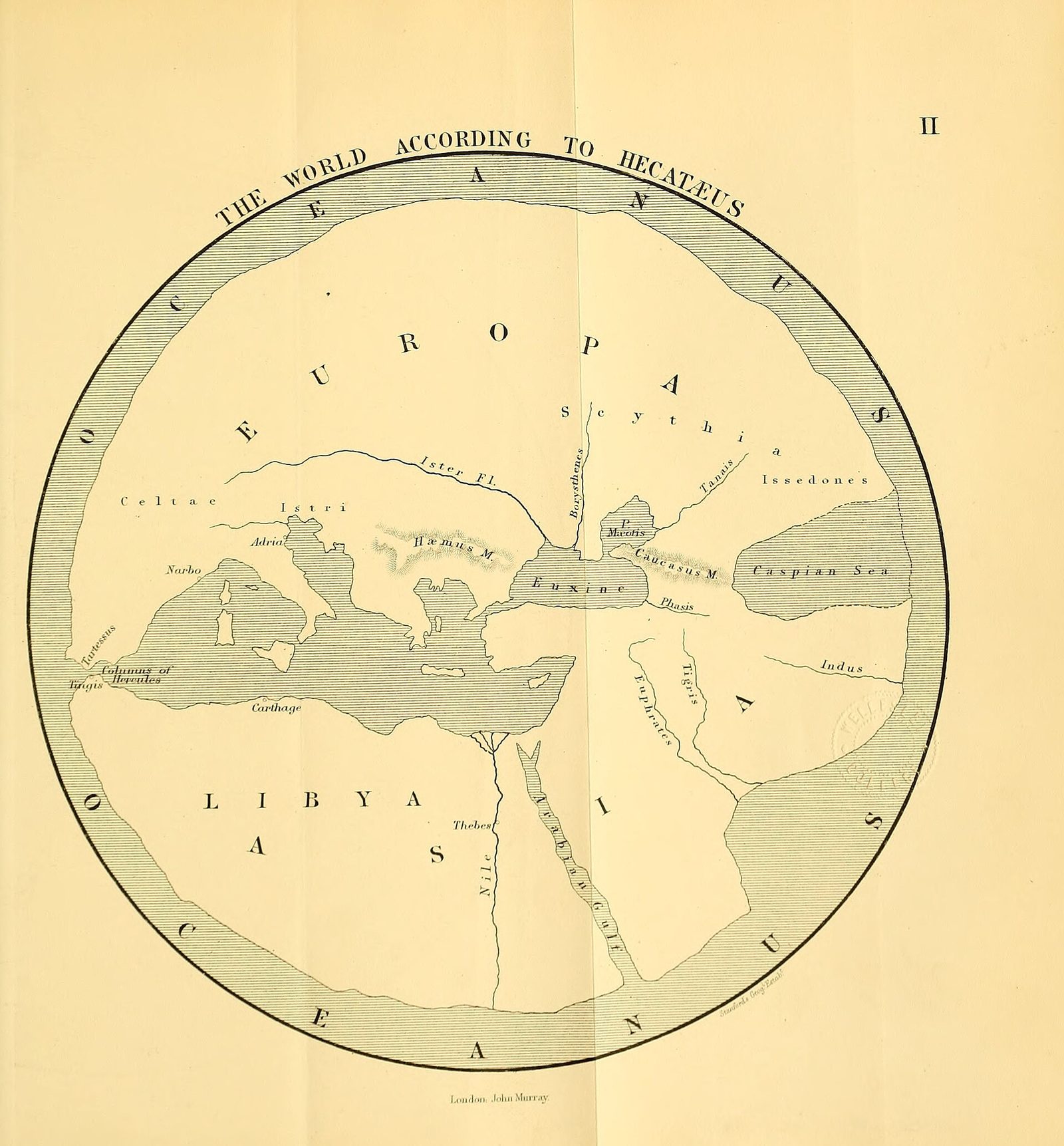
Due to these mythological descriptions of Oceanus, it is easy to assume that this river was imagined to have been beyond the furthest limits of the earth as the Greeks understood it. Every territory that they were aware of, such as the land of the Celts, the Egyptians and Ethiopians, the Scythians, the Indians, etc., were all inside the area surrounded by the River Oceanus. After all, that is why it is usually called the ‘World-Encircling River’.
Yet, is this really true? Did the Greeks really believe that Oceanus surrounded the entire world? Or is this just a modern misconception?
One reason why it might be assumed that Oceanus must have gone around the entire world is because the Greeks were aware of the three continents of Europe, Africa, and Asia. They were aware of how the three were connected, and there was obviously no large river encircling any notable territory within those continents. Thus, so the logic goes, the River Oceanus must have been beyond those continents.
What Homer Really Said About Oceanus
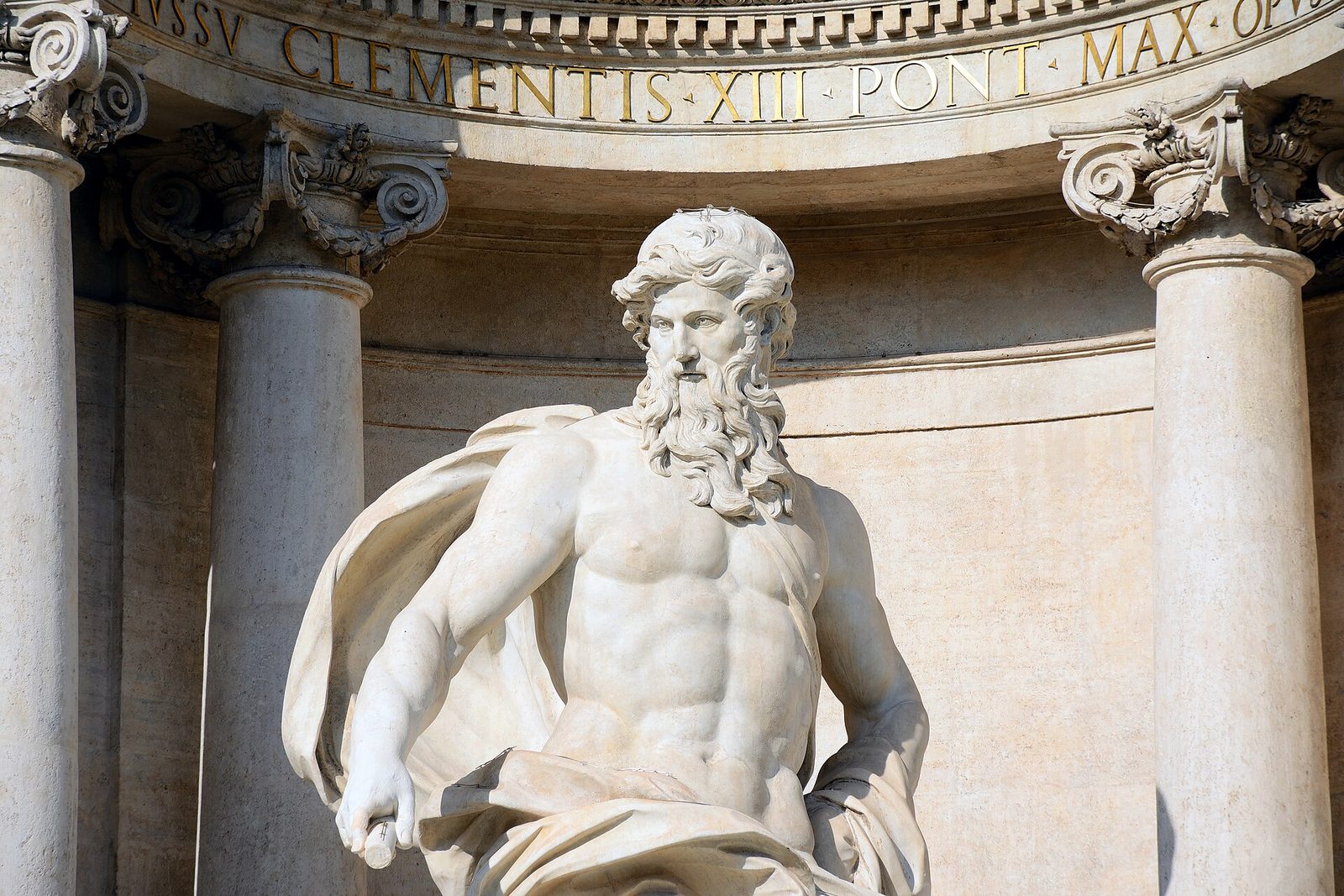
Homer’s actual statements regarding Oceanus are very important. Let us examine what he wrote about it in the Odyssey. More than one passage in this poem helps us to locate it.
Between Circe’s Island and the Entrance to Hades
Here, Oceanus features as a body of water which Odysseus, currently on Circe’s island, needs to cross to reach an oracle of the dead. If we can identify Circe’s island and the location of this oracle of the dead, that would demonstrate where Oceanus was supposed to have been.
Fortunately, Homer named three rivers that were in the immediate vicinity of this oracle of the dead, where the entrance to Hades, the Underworld, was said to have been. He mentions that the River Acheron was there. Connected to that river were two tributary streams, one of them the River of Lamentation, and the other called the River of Flaming Fire.
This location is easily identifiable. The River Acheron was a famous river in Epirus, northwest Greece. One tributary stream was anciently called the Cocytus, the exact word used by Homer which is translated ‘lamentation’.
Although there is no longer a third tributary stream in the area, there was one until relatively modern times. Allegedly, it was phosphorescent, which would match it being the ‘River of Flaming Fire’.
Based on this evidence, the entrance to Hades described by Homer can undoubtedly be identified with this location in Epirus, in the region of Thesprotia specifically. Some researchers have convincingly identified Circe’s island with Paxos, not far from the coast of Thesprotia. In any case, it logically must be one of the islands in that area.
Since Odysseus is specifically said to have crossed Oceanus to reach the entrance to Hades, this logically means that Oceanus must be a reference to the body of water immediately adjacent to Greece itself. That is, it can be identified with at least the portion of the Mediterranean Sea surrounding Greece, if not more.
Separate from the Rest of the Sea
While discussing Odysseus’ return trip from the River Acheron, we find the following revealing description:
“Then after our ship left river Ocean’s current, it reached the waves of the wide-wayed sea and the island of Aeaea [Circe’s island].”
This appears to make a distinction between Oceanus and the Mediterranean Sea in general, although the two bodies of water were connected. It would appear, then, that Oceanus was imagined to be the body of water immediately next Greece. It was not the Mediterranean Sea in general. In fact, the Mediterranean Sea was beyond the River Oceanus.
Oceanus and Lefkada
Another clue to the location of the River Oceanus comes from later on in the Odyssey. In a passage talking about a journey to the afterlife, we find the following description:
“They went, past the streams of Ocean, and the Lefkada Rock.”
The Lefkada Rock is, of course, the southernmost tip of the island of Lefkada, which is sometimes called Cape Lefkada. This massive, white promontory was well known in ancient Greece.
Notice that the ‘streams of Ocean’ and the Lefkada Rock are directly associated with each other. This suggests that they are in close proximity to each other. In fact, if anything, it suggests that the River Oceanus was closer to Ithaca (where this journey started) than Lefkada was. Yet Lefkada is right next to Ithaca.
How This Information Fits the Reality of Greece
How does this fit the reality of the world as the Greeks knew it? Well, notice that the line from the Odyssey about Odysseus’ return journey from the oracle of the dead refers to Ocean’s ‘current’. Interestingly, the surface currents of the Mediterranean Sea immediately next to the Greek coast flow almost all the way around Greece in one continuous direction.
With these facts in mind, it may well be that the River Oceanus was originally the poetic or mythological expression of the body of water which flowed, almost like a large river, essentially all the way around Greece.
With this being the case, Ithaca would have actually been in the River Oceanus. Now, consider again the mythological journey to the afterlife from near the end of the Odyssey. Starting from the north of Ithaca, a journey out into the sea to the west would, indeed, go right past Cape Lefkada. This would nicely explain why the journey to the afterlife starts off by mentioning the waters of Oceanus, and then Lefkada Rock immediately comes next.
Evidence from Hesiod Concerning the Location of Oceanus
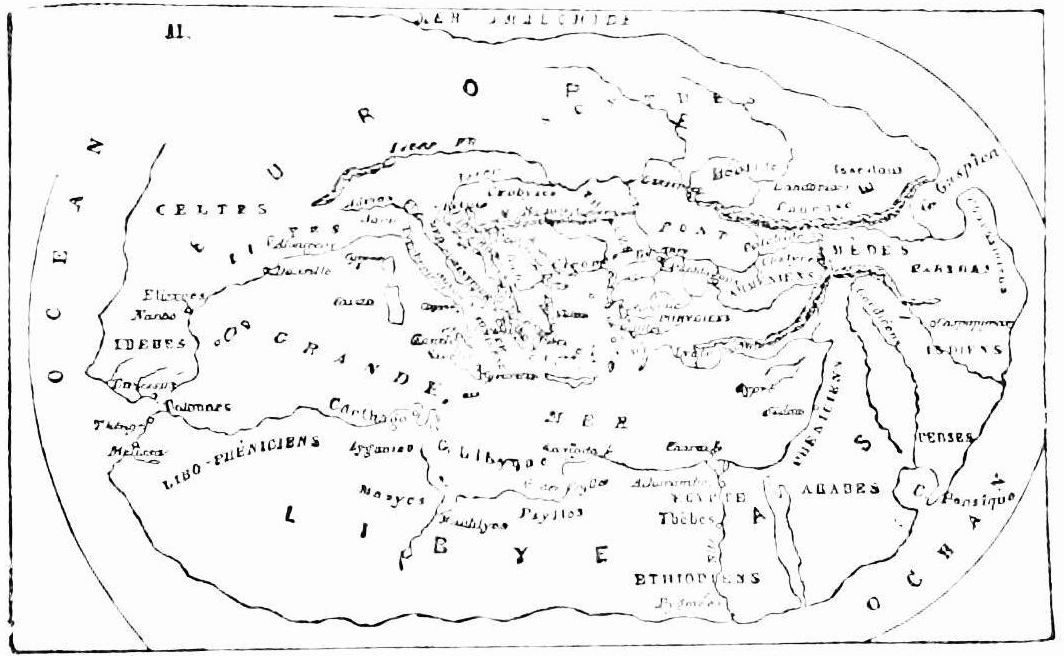
Hesiod was a contemporary of Homer, also writing in the seventh century BCE. His comments regarding Oceanus are therefore also extremely valuable. He provides several useful comments about Oceanus. He associated it was several different groups and locations which appear elsewhere in Greek records, thus helping us to locate it.
The Gorgons
In the following passage, Hesiod refers to Oceanus in association with the Gorgons:
“The Gorgons who dwell beyond glorious Ocean in the frontier land towards Night where are the clear-voiced Hesperides, Sthenno, and Euryale, and Medusa who suffered a woeful fate: she was mortal, but the two were undying and grew not old. With her lay the Dark-haired One in a soft meadow amid spring flowers. And when Perseus cut off her head, there sprang forth great Chrysaor and the horse Pegasus who is so called because he was born near the springs of Ocean.”
According to this, the Gorgons lived ‘beyond’ Oceanus. Medusa was the most famous of these Gorgons. Where Perseus slew her, which was where Pegasus was born, was ‘near the springs of Ocean’.
Where the Gorgons Really Lived
Interestingly, another seventh century BCE text, called the Cypria, places the Gorgons on the island of Sarpedon. It appears that ‘Sarpedon’ was a place name which was applied to several different locations in Greek records, but they are all consistently in the eastern Mediterranean, particularly the eastern Aegean Sea, well within the ‘real world’. Sarpedon as a character was a royal brother of Minos, king of Crete, and Rhadamanthys, king of certain other Aegean islands.
Another relatively early source, the poet Aeschylus, writing near the beginning of the fifth century BCE, placed the Gorgons at Cisthene. This was a location in northwest Anatolia, the same general location indicated by the reference to Sarpedon.
If the Gorgons lived beyond Oceanus, yet they were placed near the coast of the eastern Aegean Sea, then that would mean that Oceanus was logically somewhere between Greece and the eastern coast of the Aegean Sea. It absolutely cannot be the case that Oceanus was beyond the whole world.
This is consistent with understanding Oceanus to refer to the waters immediately around Greece itself.
Heracles Beyond the River Oceanus
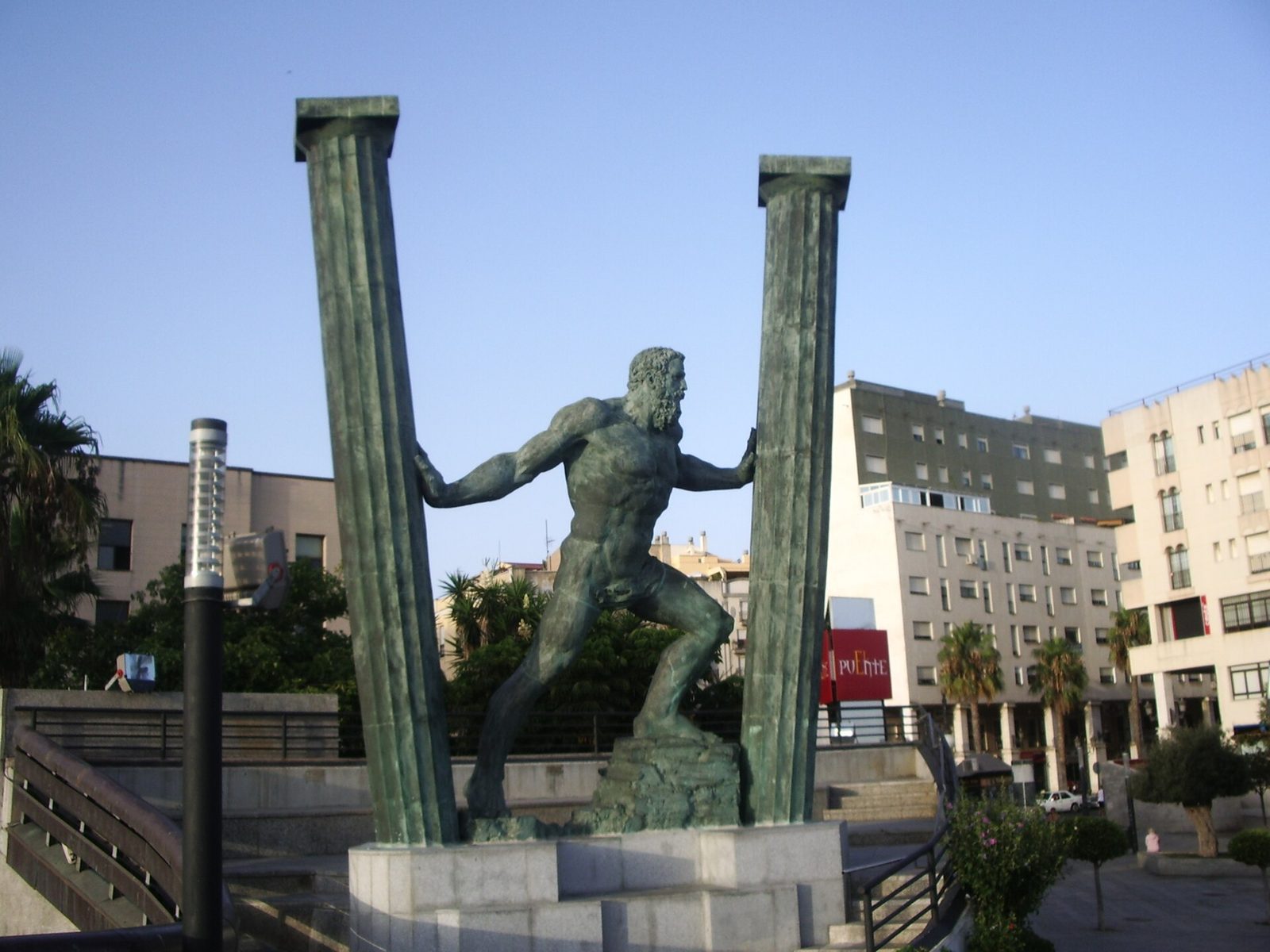
Hesiod also refers to one of Heracles’ exploits which placed him beyond Oceanus. He refers to the fact that Heracles had gone beyond Oceanus to the land of Erytheia, where he had defeated the herdsmen there and driven the oxen back to Tiryns. In later Greek mythology, this was one of Heracles’ twelve labours. These oxen are commonly called the Cattle of Geryon.
Something which is often overlooked is the very fact that Hesiod says that Heracles ‘drove the wide-browed oxen to holy Tiryns’. How could Heracles have driven a herd of cattle from Erytheia to Tiryns, which was a city in Greece, unless Erytheia and Greece were connected by land?
Yet at the same time, Hesiod does say that Heracles ‘had crossed the stream of Ocean’ to get to Erytheia. Logically then, Erytheia must have been a location which was most easily accessible by going across the waters of Oceanus, but which was nonetheless accessible to Tiryns by land if necessary. This indicates that Erytheia was still within the realms of the known Greek world, despite being ‘beyond Oceanus’.
The Location of Erytheia
The name of this island, Erytheia, comes from the name of one of the Hesperides, nymphs of the evening. It was, logically, a place in the west, associated with the setting sun. Later Greek writers associated it with an island just off the Iberian Peninsula.
Even if we accept this later interpretation, this tells us something very interesting. Despite the fact that the mythology clearly placed Erytheia beyond Oceanus, the Greeks were perfectly happy to identify Erytheia with a place within the Mediterranean. This clearly shows that they did not imagine Oceanus as literally surrounding the entire world.
Evidence From the Odyssey
Interestingly, there is evidence that Erytheia was originally placed much closer to Greece than later writers assumed. In the Odyssey, Odysseus and his men are stuck on an island called Thrinacia for several weeks while on their journey home to Ithaca. They are nearly at their destination, but a south wind prevents them from moving on from Thrinacia. This strongly indicates that this island was immediately north of Ithaca.
This information suggests that the island of Thrinacia can be identified with Meganisi, which is just north of Ithaca. The name ‘Thrinacia’ supports this, since it means ‘trident’, and the shape of Meganisi is very similar to that of a trident, with several protruding headlands coming off one end.
In the Odyssey, Thrinacia was sacred to Helios, it being the island where he kept his cattle. This is very similar to the concept of Erytheia, a location dedicated to the nymph of the setting sun where sacred cattle were kept.
Of course, Meganisi is not connected by land to Tiryns. Nonetheless, there is nothing to indicate that Thrinacia and Erytheia were meant to be precisely the same place, although they were likely closely connected. Significantly, the very early Greek writer Hecataeus of Miletus explicitly placed Erytheia in the region of Ambracia and Amphilochia. This is the Greek coastland right next to Meganisi.
An interpretation which is consistent with this early evidence is that Heracles travelled by sea from the Peloponnese to Ambracia in northwest Greece, thus going ‘beyond Oceanus’. He then drove the cattle back to Tiryns in the Peloponnese by means of the Isthmus of Corinth.
Again, we see that the earliest evidence indicates that Oceanus was the term for the water immediately surrounding Greece.
Conclusion
In summary, we can see that the earliest evidence does not support the traditional idea of Oceanus being a river which literally encircled the entire world. Homer associates it with the water just off the River Acheron in northeast Greece. He also associates it with Lefkada, in the same general region. This supports the conclusion that Oceanus was thought by Homer to have been the water immediately surrounding Greece.
We have also seen evidence from Hesiod that points to the same conclusion. He places the land of the Gorgons beyond Oceanus, yet another seventh century BCE source places the Gorgons on Sarpedon, a location consistently associated with the eastern Aegean. A source from about 500 BCE supports this, connecting them with Cisthene in northwest Anatolia. This is consistent with the evidence from Homer concerning the location of Oceanus. Identifying Oceanus as the water surrounding Greece is also supported by Hesiod’s reference to Heracles going beyond Oceanus to take the Cattle of Geryon from Erytheia, which the earliest evidence places in northwest Greece.
Therefore, it appears that the ‘word-encircling River Oceanus’ was originally just a poetic description for the water surrounding Greece. The idea of it being a river that flowed may have come from the fact that the surface currents of the Mediterranean flow all the way around the coast of Greece.
Sources
Hard, Robin, The Routledge Handbook of Greek Mythology, 2004
Vermeule, Emily, Aspects of Death in Early Greek Art and Poetry, 2023
Braun, Thomas, Hecataeus’ Knowledge of the Western Mediterranean Thomas Braun, 2004
https://mythopedia.com/topics/oceanus
https://www.theoi.com/Kosmos/Okeanos.html