Was the Minoan Civilisation the Real Atlantis?

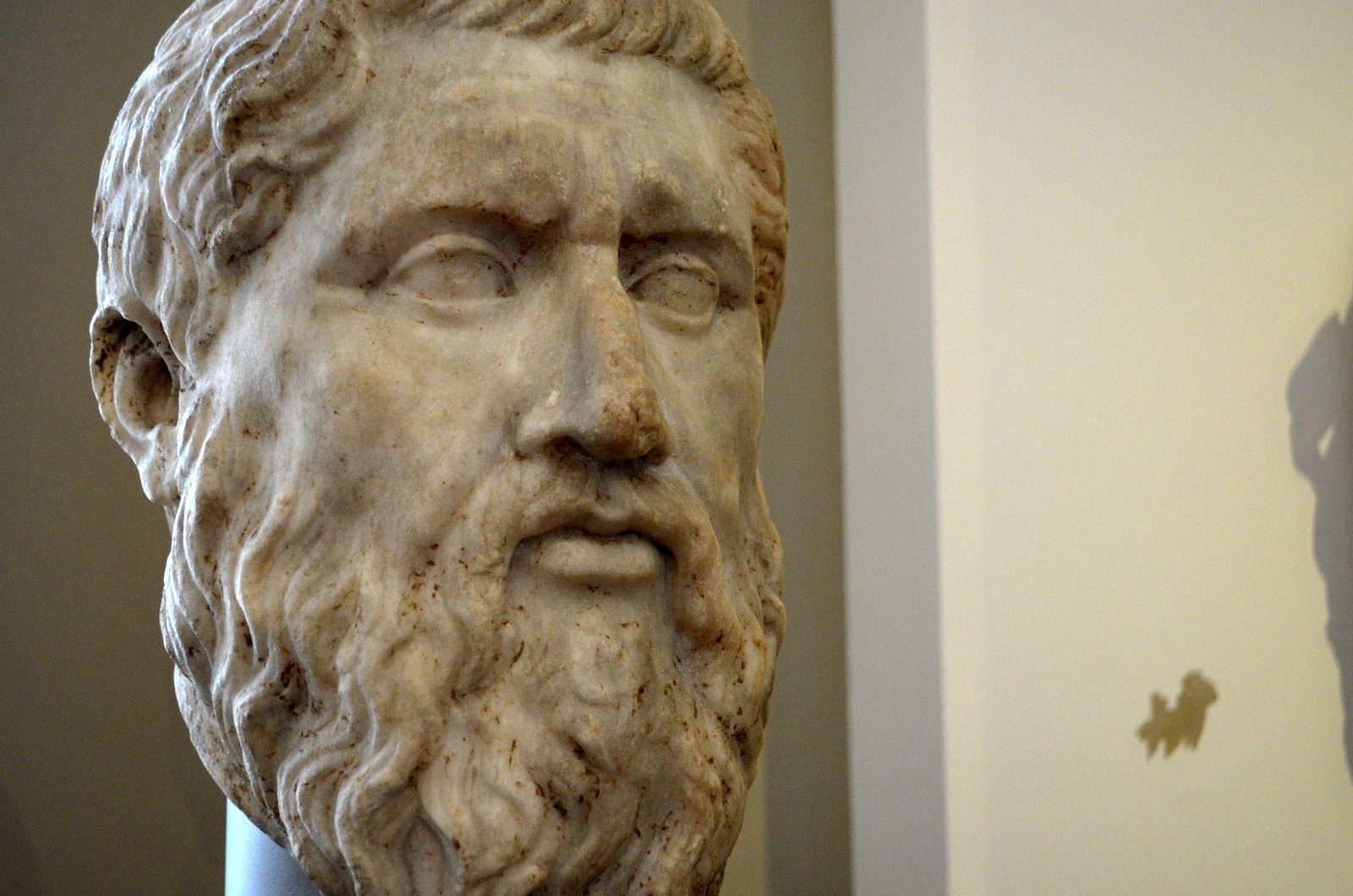
Of all the theories connecting Atlantis with a real civilisation, the one which has by far the most academic support is the Minoan theory. This theory explains the tale of Atlantis as coming from distorted accounts of the Minoan civilisation, which was at its peak in the Bronze Age. Even among scholars who interpret Atlantis as an allegory invented by Plato, many conclude that it may have been based on stories about the Minoans. What is the evidence for this theory? How do the Minoans fit Plato’s seemingly larger-than-life description of Atlantis?
Who Were the Minoans?
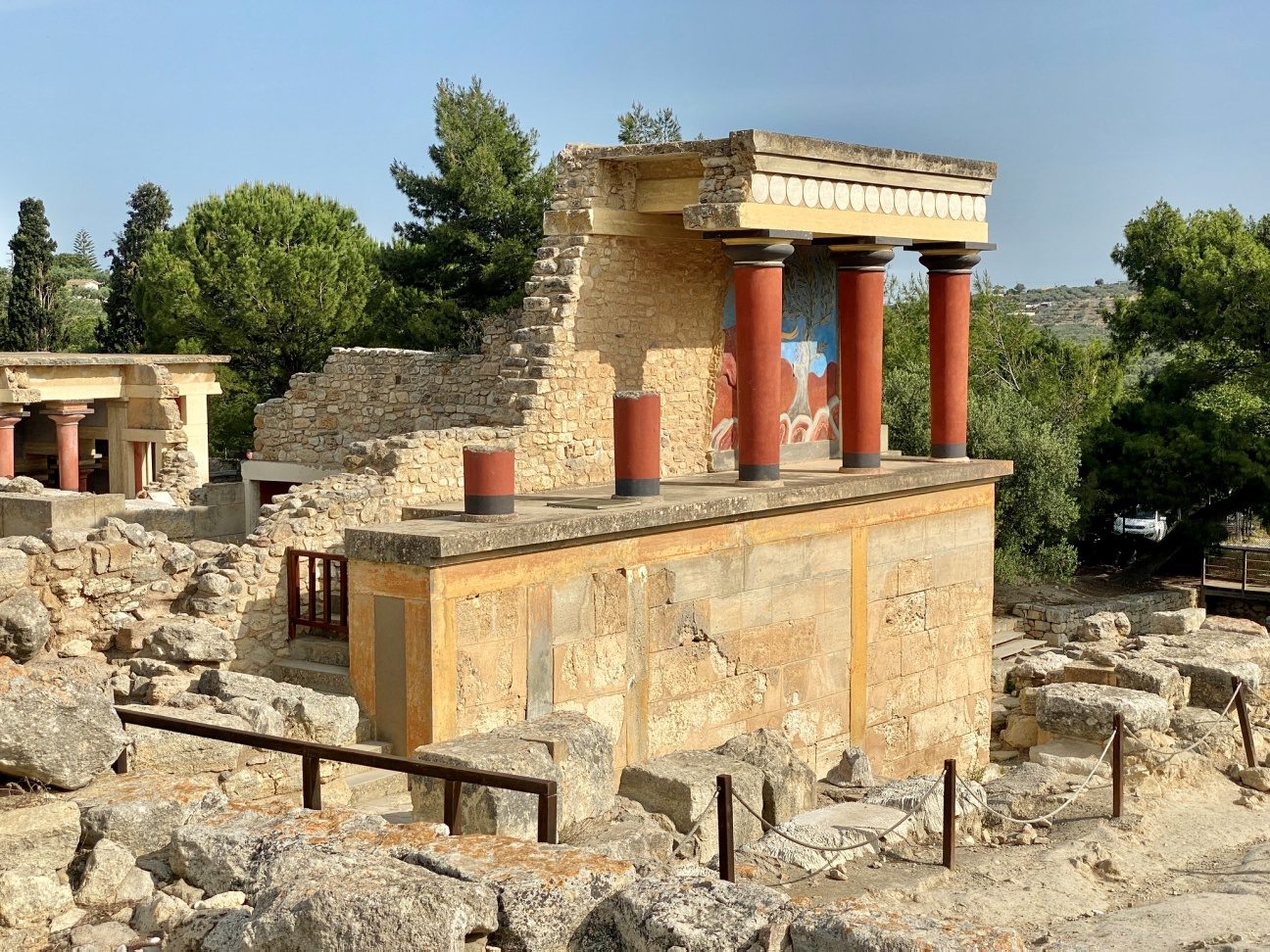
The Minoans were a Bronze Age civilisation centred on Crete, at the southern border of the Aegean Sea. They also had colonies on several of the Aegean islands, and there is some evidence that they had colonies on parts of the mainland, such as in Anatolia and Palestine.
They were a very rich, powerful, and advanced civilisation for their time. As a powerful naval civilisation from the distant past, they are immediately attractive candidates for the Atlanteans. While there were numerous civilisations that expanded out over large territories, there were not many comparable naval civilisations in the era before the Greeks began keeping historical records.
The Minoans were closely associated with the Bronze Age Mycenaean Greeks on a cultural level. The two nations eventually went to war, with the Mycenaeans defeating the Minoans and conquering Crete. Although their fall from power and disappearance is quite well understood now, the enigmatic nature of it decades ago contributed to the speculation about them being connected to Plato’s Atlantis.
What About the 9000 Years?
The timing of Plato’s tale of Atlantis is the first apparent problem that immediately presents itself regarding this theory. For many, this seems like an insurmountable problem, so it is necessary to address this issue right away.
The Minoans were a Bronze Age civilisation. How, then, could they have anything to do with Plato’s Atlanteans, who lived some 9000 years before the time of Solon in 600 BCE?
How We Know That This Chronological Marker Is Wrong
Firstly, it needs to be established that the legend of Atlantis simply cannot be set any earlier than the Bronze Age. How can we say this with such certainty? The answer is because Plato provides us with numerous details which absolutely preclude the possibility that Atlantis existed before the Bronze Age.
One obvious example is the metal that Atlantis was said to have used in its decorations and monuments. For example, the people of Atlantis are said to have made extensive use of gold and silver, as well as tin and copper. Anthropologists date the use of copper to as early as 8000 BCE, the use of gold to 4000 BCE, and the use of silver and tin to 3000 BCE. Therefore, it is impossible for the Atlantean civilisation as described by Plato to have existed as early as 9600 BCE.
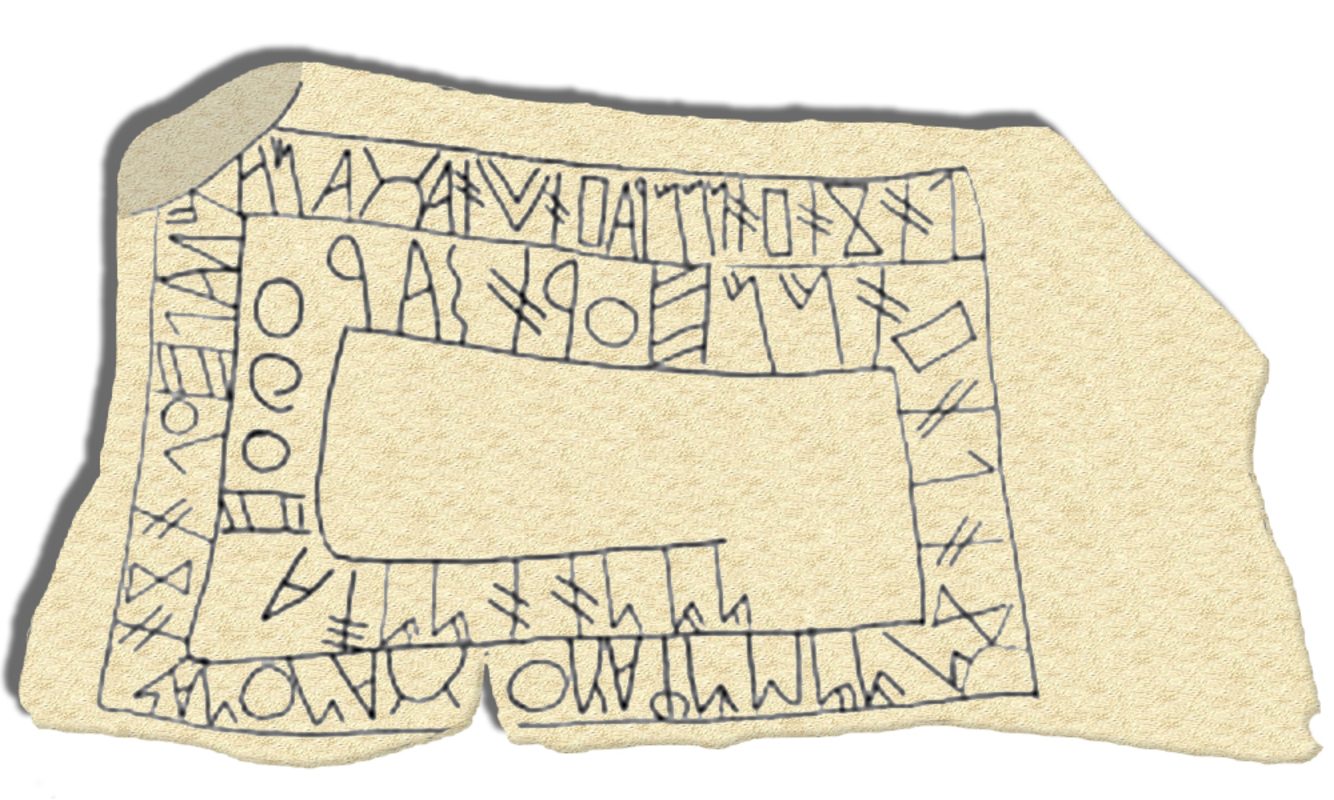
Furthermore, the Atlanteans are shown to have engaged in writing. This, too, is something whose origin is usually dated around 3000 BCE by anthropologists. All of these facts clearly show that Atlantis cannot have existed in c. 9600 BCE.
Even more significantly, Plato’s account of Atlantis places it in, or not long before, the era in which the Greeks had a written language. Their first writing system was Linear B, which appeared in Greece about the middle of the second millennium BCE. This proves that the tale of Atlantis can only be set just before that at the very earliest.
Two Explanations for the 9000 Years
This still leaves open the question of how that chronological marker of 9000 years before Solon’s time originated in the first place. There are two possible explanations.
The first is that it is simply an exaggeration due to the distortion that naturally occurs as a tale is repeated. We could compare this to Herodotus’ claim that the Greeks adopted the Phoenician alphabet 1600 years before his own time, when that figure should really be only 400 years.
Even more dramatically, Herodotus places the first king of Egypt about 11,340 years before his time, or about 11,790 BCE. In contrast, modern scholars place the first king of Egypt closer to 3000 BCE. This is certainly a plausible explanation for the exaggeration of when Atlantis existed.
Another explanation is that the figure of 9000 was misinterpreted from an original ‘900’. One suggestion for how this may have happened is that it was due to the fact that the figures for hundreds and thousands in ancient Egyptian demotic script from the time of Solon were extremely similar. The only difference is that hundreds had longer ‘tails’ than thousands, but the thousands sometimes had unexpectedly long tails, which could easily cause confusion.
How the Minoans Fit the Geography of Atlantis
We have already seen that the very basic profile of the Minoans fits the Atlanteans. They were both impressive and rich naval civilisations that spanned a number of islands. Let us now take a closer look at how the Minoans match the geography of Atlantis.
Here is the basic description of the Atlantean empire as described by Plato in the Timaeus:
“In this island of Atlantis there was a great and wonderful empire which had rule over the whole island and several others, and over parts of the continent.”
Plato does not give a name to this continent, but it was evidently the mainland adjacent to the sea in which Atlantis was situated, wherever that was. So, we can see that the Atlanteans ruled over one main island. This was the island of Atlantis. Presumably, this was the largest island within their domain and was the centre of their civilisation. They also ruled over several other islands, presumably smaller ones. And, finally, they held power over parts of the continent, the adjacent mainland.
What about the Minoans? The archaeological record is clear that the island of Crete was the centre of their civilisation. This is a significant island, one of the largest of the Eastern Mediterranean.
Minoan Colonies
What about their rule over ‘several other’ islands? In the case of the Minoan civilisation, it can sometimes be difficult to determine what was a true colony and what was simply an area of cultural influence. Nonetheless, there are at least some locations which are accepted as colonies of the Minoans.
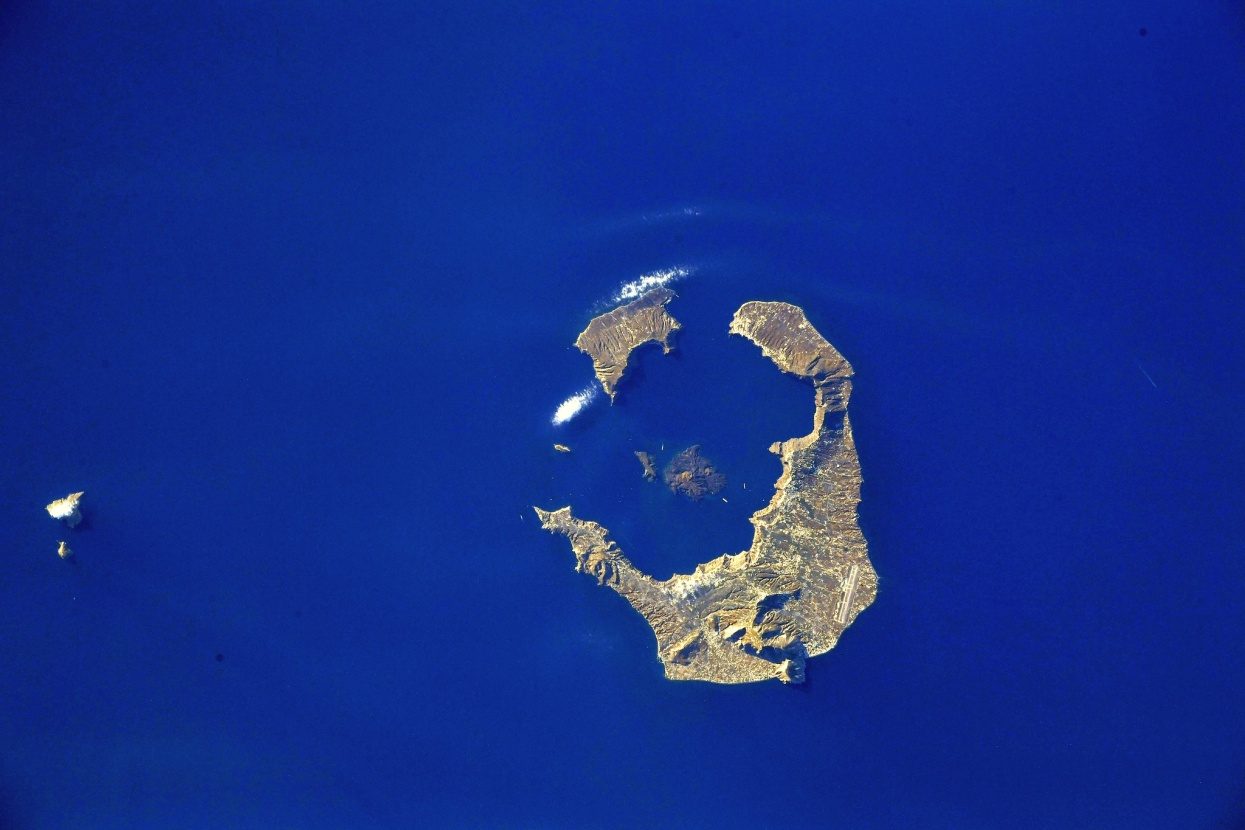
The most famous and significant example is Thera, the island also known as Santorini. This is directly north of Crete. In 1967, evidence of a major Minoan settlement was discovered here. Incidentally, this discovery occurred as a direct result of the search for Atlantis.
Another Minoan colony has been found on Kythera, just next to the Greek mainland. There is also strong evidence for a colony on Rhodes all the way over on the other side of the Aegean. Between Rhodes and Crete, the islands of Karpathos, Saria and Kasos also had Minoan colonies on them.
On Melos, which is to the west of Thera, there is evidence that the Minoans also occupied a settlement there, although they do not seem to have been the ones who originally built it.
Parts of the Continent
What about their rule over ‘parts of the continent’? This is also confirmed by archaeology. Miletus, on the Anatolian mainland next to the Aegean Sea, is now understood to have been a Minoan colony. Nearby Iasos, likewise, appears to have been a colony.
Whether they established colonies elsewhere on parts on the continent is debated. It is clear that they had a strong presence in Syria, as shown by impressive Minoan artwork found in some of the palaces there. However, this is usually taken to simply mean the presence of hired Minoan workers.
In any case, the evidence is clear that they had at least some colonies on the continent, with a strong presence even outside of those colonies.
Biblical Support for More Colonies
Interestingly, there is a tradition preserved in the Bible regarding another region in which the Minoans settled. In the Book of Deuteronomy, we find the following statement:
“As for the Avvim, they had dwelled in settlements as far as Gaza until the Caphtorim, who came out from Caphtor, annihilated them and settled in their place.”
Caphtor is the ancient Hebrew name for Crete. The ‘Caphtorim’, then, would be the Biblical term for the Minoans in this time period, since this statement concerns the era before the Minoan civilisation on Crete was overthrown by the Greeks.
In other words, this account preserves the tradition that the Minoans had invaded, conquered, and settled in a portion of southern Canaan in the Levant.
Was Atlantis Inside or Outside the Mediterranean?
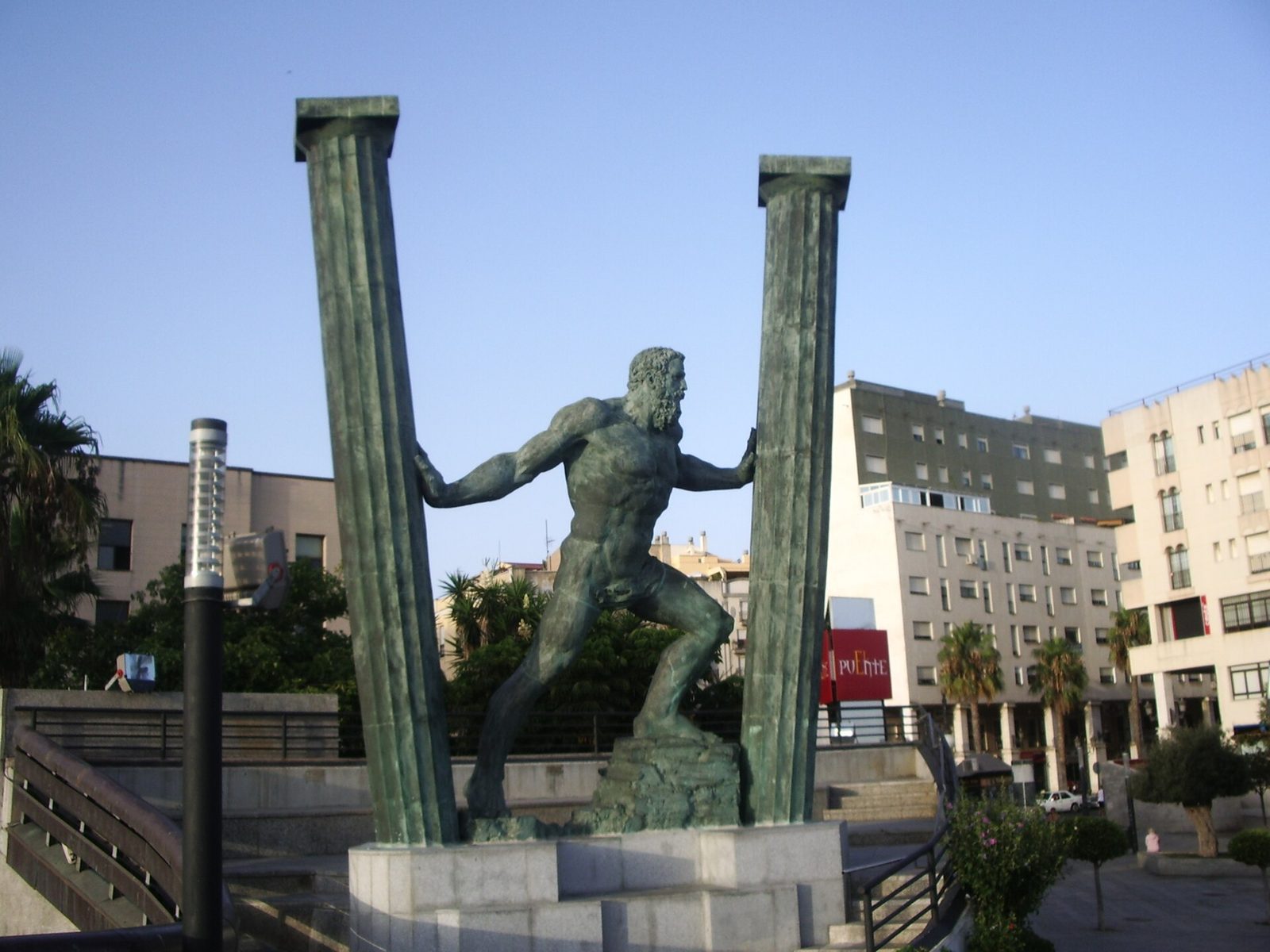
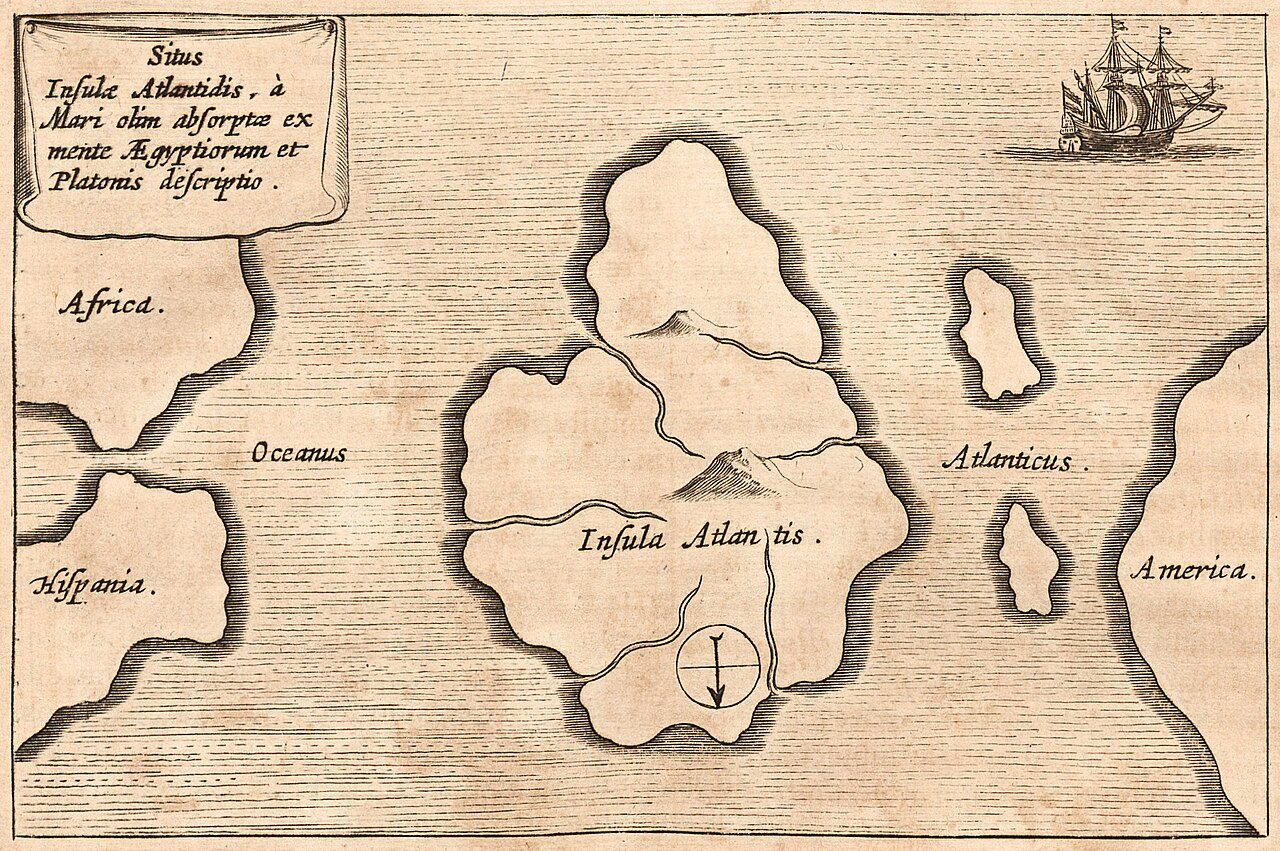
Perhaps the most common argument presented against the Minoan theory of Atlantis is the supposed fact that Plato places Atlantis outside the Mediterranean. The basis for this is that he places it ‘in front of’, or ‘before’, the Pillars of Heracles. Since the Pillars of Heracles are usually placed at the Strait of Gibraltar, this is taken to mean that Atlantis was outside the Mediterranean.
However, Plato does not actually say that Atlantis was outside the Pillars of Heracles. The word he uses, meaning ‘in front of’ or ‘before’, could logically be interpreted as meaning that it was on the same side as the narrator (the narrator being an Egyptian priest in this case).
Atlantis and the True Sea
We will examine the issue of the Pillars of Heracles in more depth later. However, let it first be noted that there is another piece of evidence used to argue that Atlantis was outside the Mediterranean. Plato wrote that Atlantis was:
“the way to other islands, and from these [other islands] you might pass to the whole of the opposite continent which surrounded the true sea.”
This is almost universally interpreted as meaning that the sea in which Atlantis and the other islands were located was this ‘true sea’ (traditionally translated incorrectly as ‘true ocean’). With this in mind, the very next statement in the account appears to preclude the idea that Atlantis was inside the Mediterranean:
“for this sea which is within the Straits of Heracles is only a harbour, having a narrow entrance, but that other is a real sea, and the surrounding land may be most truly called a boundless continent.”
Other passages categorically confirm that the Mediterranean coasts of Europe and North Africa were considered to be ‘within the Straits, or Pillars, of Heracles’, which means that ‘this sea which is within the Straits of Heracles’ must be the Mediterranean. Therefore, the fact that it is contrasted in this line with the ‘true sea’ means that the ‘true sea’ is not the Mediterranean.
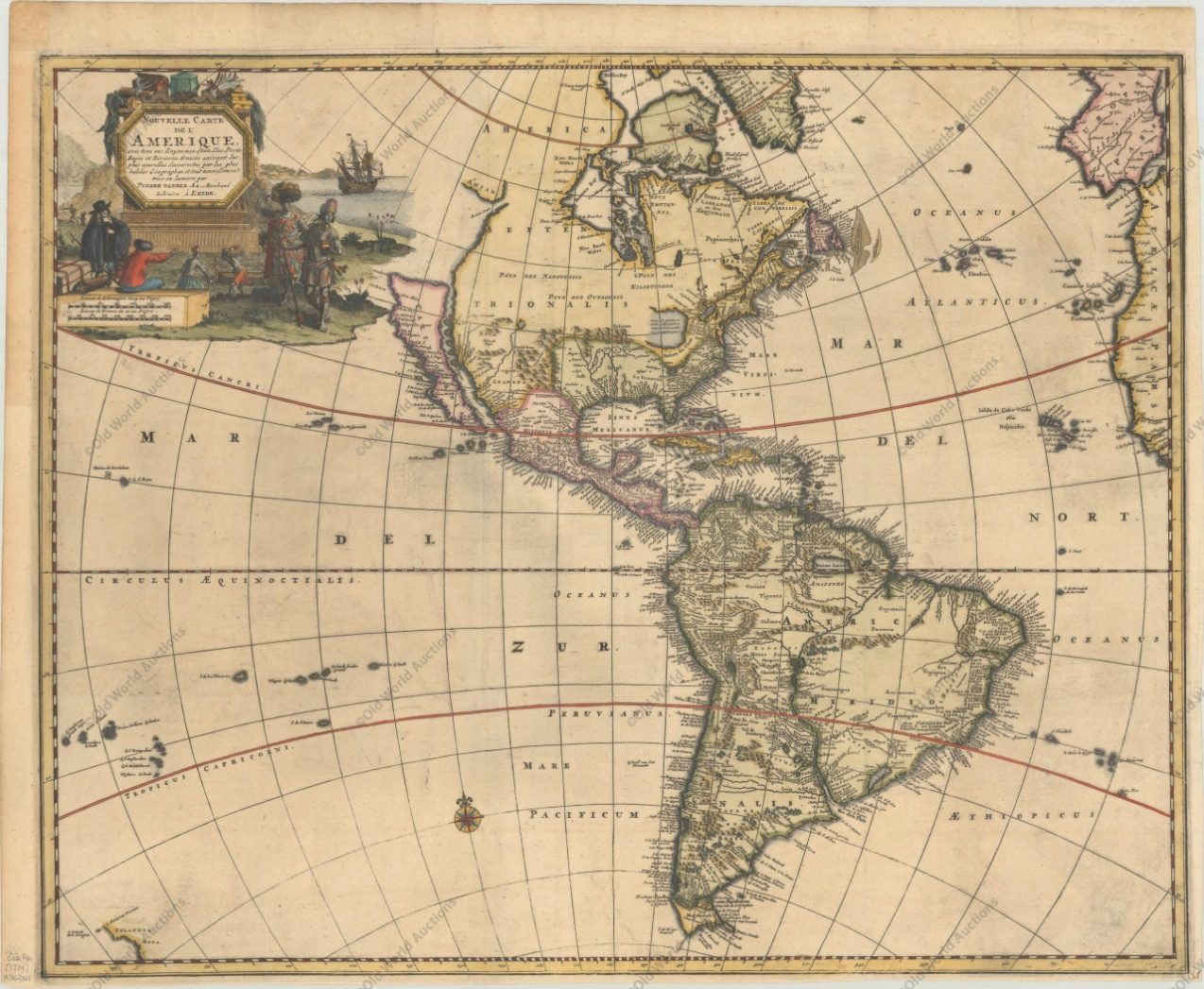
The traditional interpretation understands the ‘true sea’ to be the Atlantic Ocean, although imagined as being even larger than it really is, surrounding the entire known world. This is the sea that Atlantis and the other islands were in, and then the ‘boundless continent’ surrounded this world-encircling sea.
The True Relation Between Atlantis and the True Sea
In reality, despite the popular interpretation, there is not a single line in Plato’s account that indicates that the sea in which Atlantis and the other islands were situated was identical to the ‘true sea’ which the boundless continent surrounded.
An equally acceptable interpretation, which does no damage to Plato’s wording, is the following: Atlantis and the other islands were located in a sea bordered by the ‘boundless continent’. When going from these islands to the continent, one would reach the outer rim, not the inner rim, of that continent. Thus, the true sea which was surrounded by this continent was further away from Atlantis than the closest edge of the continent
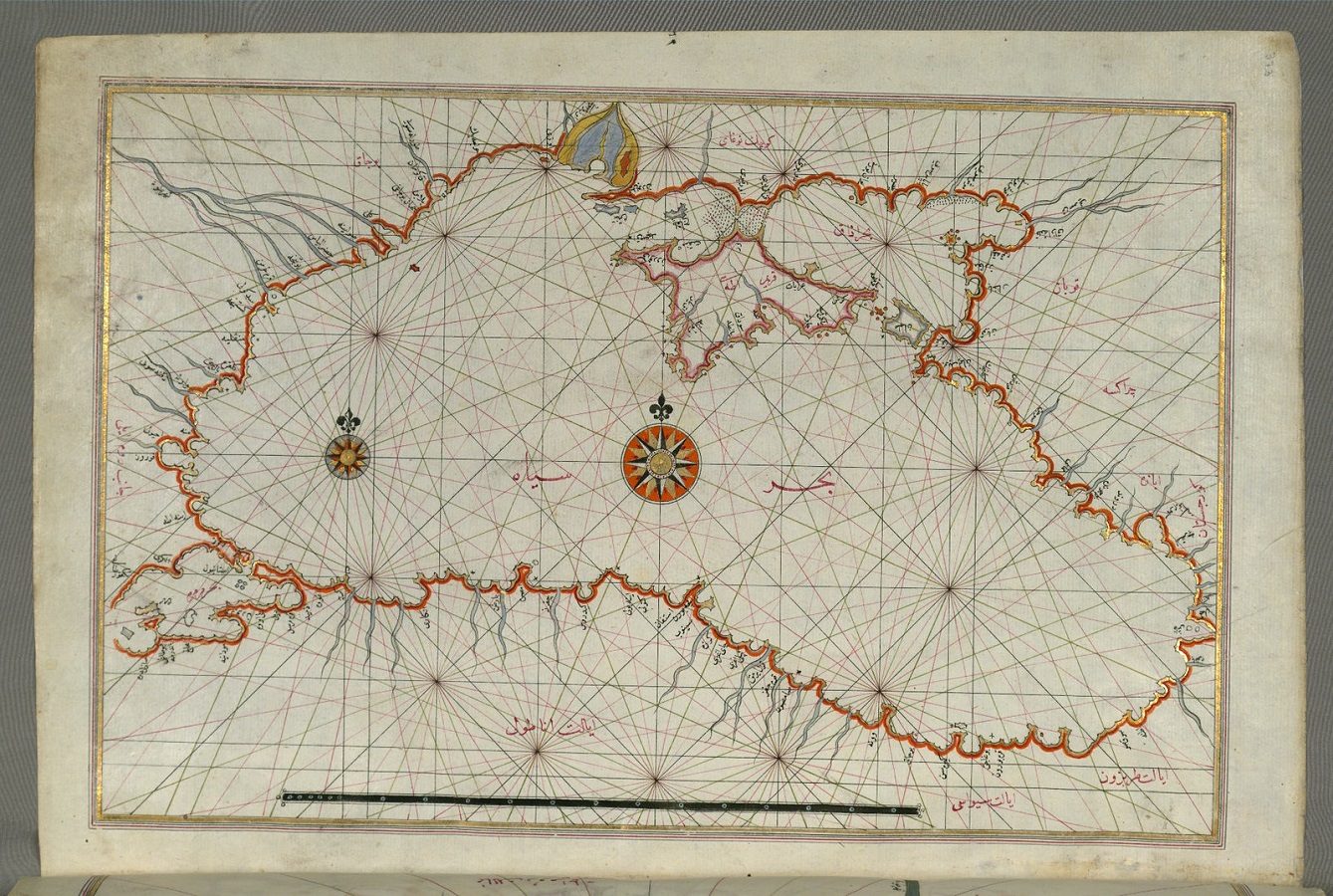
While this may sound somewhat confusing and arbitrary, it makes perfect sense in terms of real-world geography. From Crete, a route past the islands of the Aegean would take you to the ‘opposite continent’, or mainland, which is Eurasia. The part of this continent adjacent to the Aegean Sea surrounds the Black Sea, which would thus be the ‘true sea’ of Plato’s description.
The reference to the Mediterranean as being like a harbour in comparison to the true sea does not necessarily have anything to do with size. It can be interpreted in terms of the type or quality of sea. The Mediterranean was comparatively easy to navigate and full of safe locations to dock one’s ship.
In complete contrast, the Black Sea was extremely dangerous and inhospitable. It is essentially one vast expanse of water, and even the coasts are generally much more dangerous than those in the Mediterranean. For these and other reasons, the Greeks knew it as the ‘Inhospitable Sea’ or just ‘the Sea’ (that is, ‘Pontos’, the same Greek word used by Plato to refer to the sea surrounded by the boundless continent). It was the definitive sea of their world. No doubt, this was the ‘true sea’ in Plato’s description.
The Pillars of Heracles
As we already saw, Plato does not actually say that Atlantis was outside the Pillars of Heracles, just that it was in front of them. Nonetheless, the Critias does specifically say that the war between Atlantis and Athens was a war between those inside the Pillars of Heracles and those outside.
This has commonly been interpreted to mean that Atlantis was outside, while Athens was inside, but Plato does not actually say that. In fact, if he kept the same order when specifying who was on each side (which, in the absence of contradictory evidence, should be the most logical conclusion), he actually placed Atlantis inside the Pillars.
How could Athens be outside the Pillars of Heracles if those pillars represent the Strait of Gibraltar? Well, it could not. But the reality is that the ‘Pillars of Heracles’ were placed in other locations.
Put simply, the Pillars of Heracles represented limits (and they were sometimes used in a metaphorical sense with that meaning as well). There are ancient Greek records of the Pillars of Heracles in the far west, but also at the limit of Greek territory in the east. There are also later records placing the Pillars of Heracles in the far north. Is it not logical that there would also be Pillars of Heracles in the south?
The Southern Pillars of Heracles
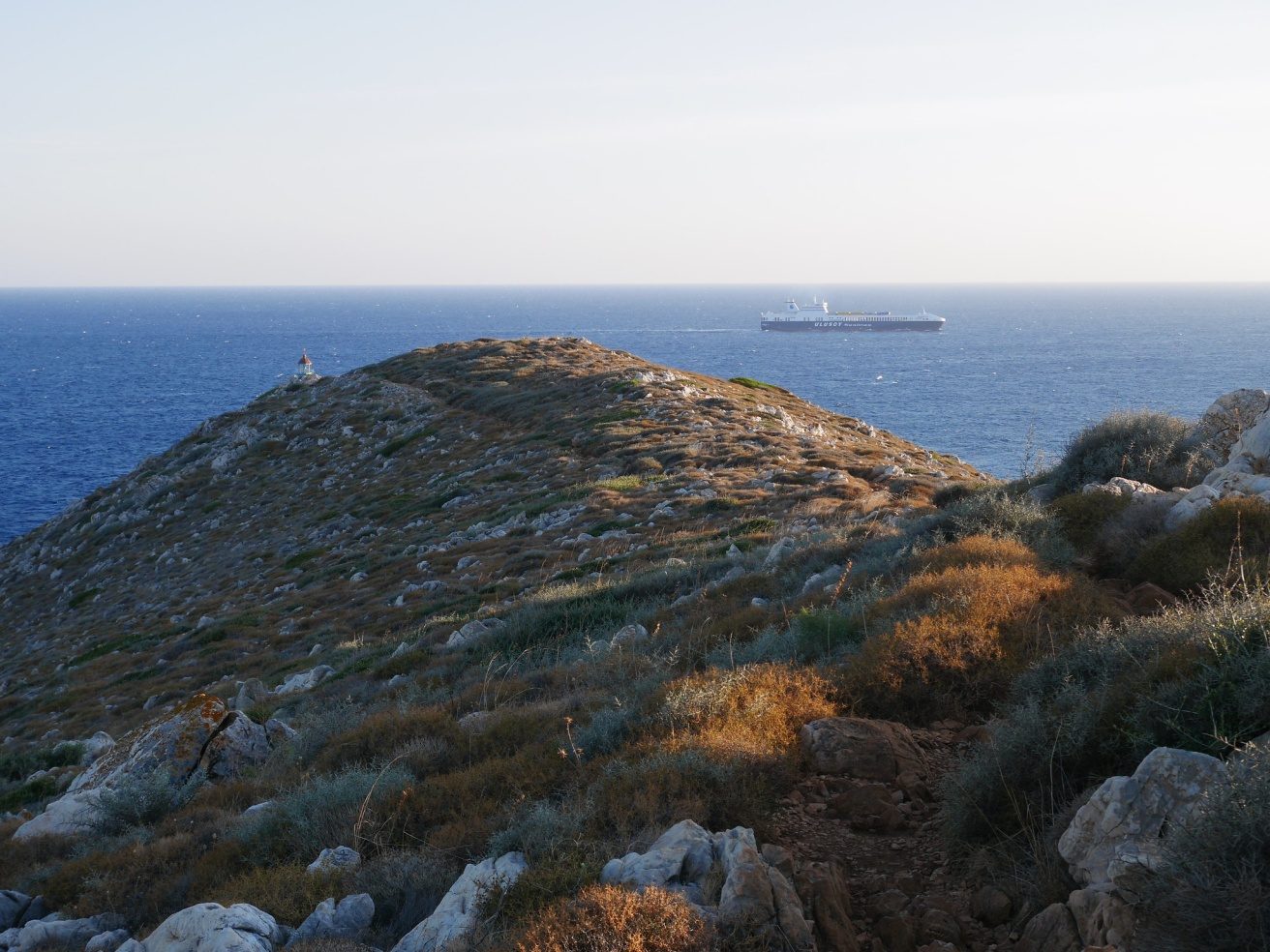
Beyond just this logical argument for the Pillars of Heracles sometimes marking the southernmost limits of Greek territory, there is also some direct evidence for this. One of Heracles’ labours took him to Cape Taenarum, which is the western headland at the Gulf of Laconia, the southernmost part of Greece.
While there, he entered a cave which was viewed as the entrance to Hades. Interestingly, there are ancient Greek records which claim that the Pillars of Heracles were formerly known as the Pillars of Briareus. Briareus is a figure from Greek mythology who guarded the Titans in Tartarus.
Where would the Pillars of Briareus logically be placed? Since Tartarus was also part of the underworld, being beneath even Hades, it is logical that they would be at the entrance to the underworld, which was Cape Taenarum. And since Heracles was one of the very few who famously entered the underworld, this also offers a logical explanation for why these pillars later came to be known as the Pillars of Heracles.
With this placement in mind, it is evident that the strait referred to in Plato’s passage as marking the Pillars of Heracles must be the strait now called the Strait of Elafonisos at the Gulf of Laconia, from which one enters the Aegean and could travel, for example, in the direction of Egypt.
Evidently, the Egyptians considered the Mediterranean Sea to be ‘inside the Pillars of Heracles’, while the Greeks were outside, or beyond, those pillars. Crete, the homeland of the Minoans, is indeed just in front of the Gulf of Laconia, therefore fitting Plato’s description perfectly.
‘From Here to Any Part of the Sea’
There is one small line in the Critias which shows clearly that Atlantis was supposed to have been in the Mediterranean Sea. Critias, reciting the words of the Egyptian priest, says that Atlantis ‘became an impassable barrier of mud to voyagers sailing from here to any part of the sea.’
The word ‘here’ is usually seen as ‘hence’, due to the most common online translation being from the 19th century, and the word ‘sea’ is traditionally translated incorrectly as ‘ocean’, due to the popular interpretation of Atlantis being in the Atlantic Ocean. Nonetheless, the word used is ‘pelagos’, simply meaning ‘sea’.
When we read this line in accurate modern English, the meaning is clear. The subsidence of the island of Atlantis created an impassable barrier of mud to voyagers sailing from ‘here’ – whether that means Egypt or Greece – to ‘any part of the sea’.
If Atlantis was out in the Atlantic Ocean, this statement would not make any sense whatsoever, because it would certainly not have impeded sailing within the entire Mediterranean. The only way in which this statement about the barrier of mud makes any sense is if Atlantis was an island relatively close to Egypt or Greece (depending on whether Critias was quoting the Egyptian priest or just paraphrasing, since that would impact the understanding of ‘here’).
Objections to This Location
Aside from the issue with the Pillars of Heracles, there is also the fact that Plato calls Atlantis ‘greater than Libya and Asia together’. This is commonly understood to mean that it was larger than those two landmasses. Nonetheless, this is not the only possible understanding.
The Greek word ‘meizon’ used by Plato simply means ‘greater’ in any sense, not necessarily in terms of size. Given that the Libyans and the Asiatics were the two most common enemies of the Egyptians, it would be the most logical thing in the world for the Egyptian priest to say that Atlantis was greater than those two nations.
Another supposed issue is the placement of Atlantis in the Atlantic Sea. However, this term simply means ‘Sea of Atlas’. Plato’s account itself says that the sea received this name from Atlas, the first king of Atlantis, who is clearly not the same as Atlas the Titan, from whom the Atlantic Ocean gets its name.
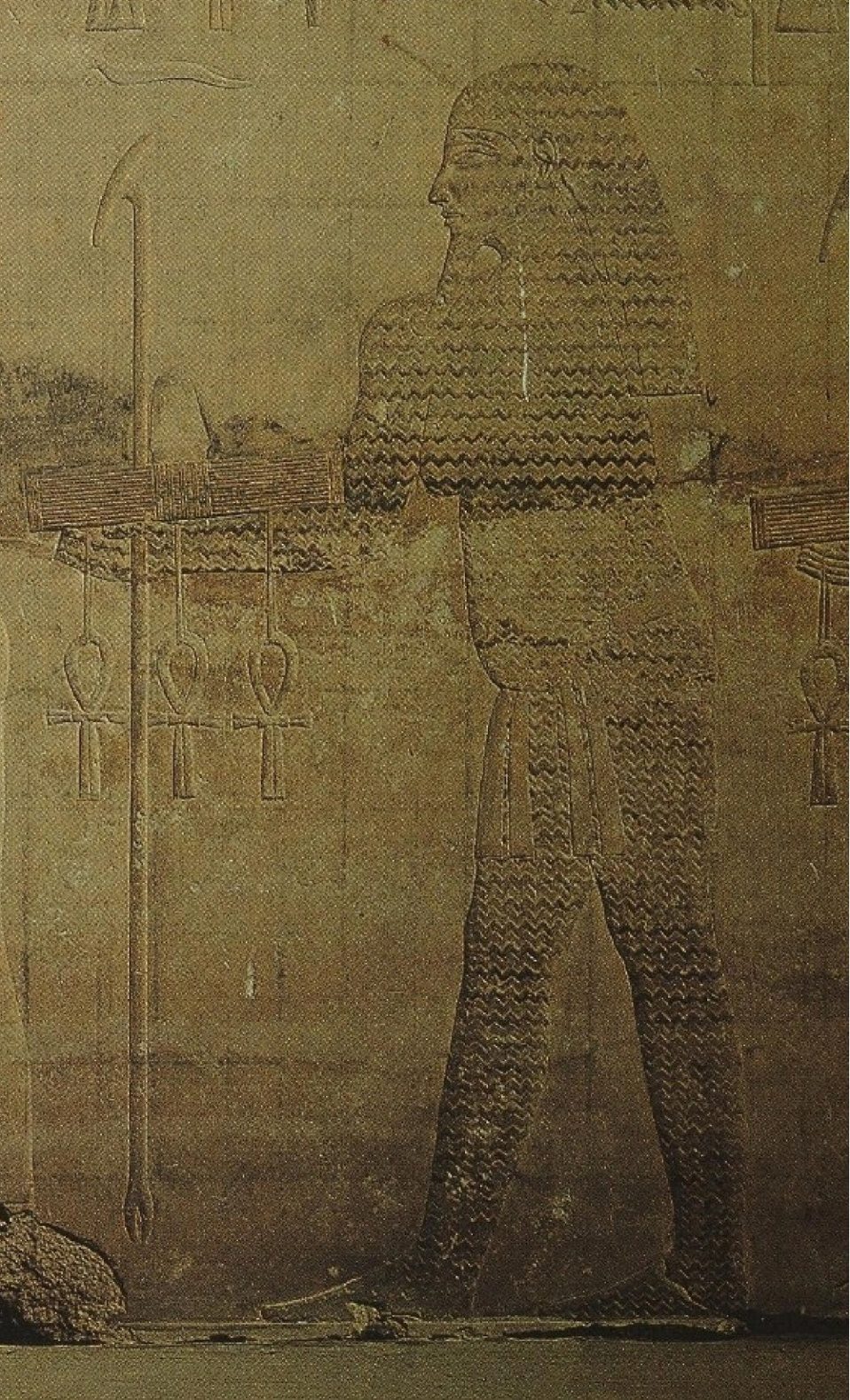
Bearing in mind that the account of Atlantis allegedly came from the Egyptians, it may well be that this is simply their word for the Mediterranean Sea, which was ‘Wadj-Wer’ (also rendered ‘Uat-Ur’). Egyptian records refer to the Minoans as inhabiting the islands of this sea, using this specific term.
Given how the Greeks rendered other Egyptian names (such as ‘Uto’ from ‘Wadjet’ and ‘Osiris’ from ‘Usir’), the term ‘Wadj-Wer’ could very well have developed into something like ‘Atlas’ among the Greeks. Notice, from the previous examples, the change of ‘Wadj’ into ‘Ut’ and the addition of ‘is’ on the end of ‘Usir’. Furthermore, the Egyptians made no distinction between ‘r’ and ‘l’.
The Minoan Civilisation and Plato’s Description
Now that we have seen how the Minoans perfectly match the geography of Plato’s description, what about the actual civilisation?
International Trade
First, consider one generic statement about Atlantis. It was allegedly a centre of international trade. Plato describes how its harbours were full of merchants. They were said to have come from a variety of different places. Plato says that ‘many things were brought to them from foreign countries’.
This matches very well with the Minoan civilisation. It was indeed a centre of international trade. Crete was ideally positioned for this, being at the south of the Aegean Sea. Any traders travelling from the Central or Western Mediterranean to the Eastern Mediterranean would inevitably stop off at Crete. The archaeological evidence shows how rich and prosperous the Minoans were from their trading empire.
The Large Plain
One of the most prominent features of Plato’s description of Atlantis in the Critias was a very large, fertile plain in the centre of the island. It was rectangular in shape, looking towards the south and sheltered by large mountains to the north.
This has regularly been associated with the Messara Plain in the centre of Crete. It is indeed towards the south, and there are large mountains towards the north, including Mount Ida, the tallest mountain on Crete.
The Temple of Poseidon
Also described as being near the centre of the island was an impressive temple. This was the temple of Poseidon, also dedicated to his lover Cleito. It had a strange, barbaric appearance and was a stadium in length and half a stadium in width. This would give it a total area of about 16,000 square meters.
Inside, bull-fighting games were performed. After the bulls were captured, they were led to a pillar which had a sacred inscription on it. The bull would then be slaughtered over the pillar as a sacrifice.
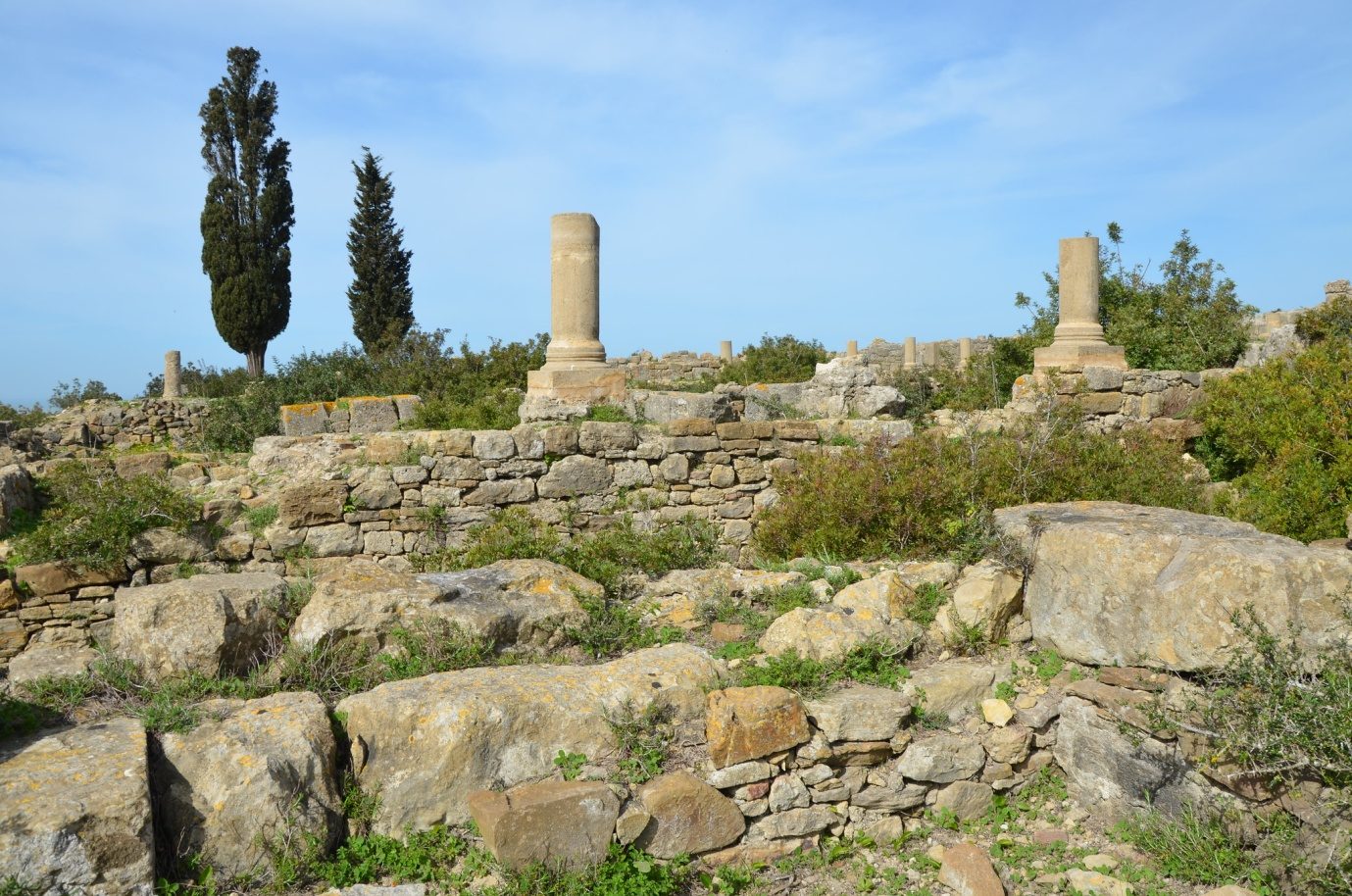
On the island of Crete, in about the centre of the island lengthways, was the Palace of Knossos. This ‘palace’ also served temple functions. It covered an area of about 14,000 square meters, very close to the figure provided by Plato. Its appearance was very complicated and must have seemed ‘barbaric’ to the Greeks, likely leading to the myth of the labyrinth at Knossos.
In the central courtyard of the Palace of Knossos, bull-fighting games were performed. There are crypts off to the side of this central courtyard. In each crypt is a prominent pillar with the sacred labrys inscription on the side. Evidence of bull sacrifices have been found here.
Confirming the identification of this real-world location with the Temple of Poseidon of Atlantis is the fact that the Palace of Knossos was, in fact, dedicated to Poseidon – or rather, it was dedicated to Poteidan, the Minoan precursor to Poseidon. It was also dedicated to a goddess known as Potnia, simply meaning ‘Mistress’ or ‘Lady’.
The Circular Metropolis
Another prominent part of Plato’s description of Atlantis is the metropolis. This is famously described as circular, with concentric rings of land and water around it. There was a hill in the centre, and a channel cut through the rings of land to gain access to the sea.
The hill at the centre was said to have been about 50 stadia, or 9 kilometres, from the sea. This would suggest that the entire island on which this metropolis was found was about 18 kilometres in diameter, or about 11 miles.
This is a close match to the diameter of Thera, the large Minoan colony immediately north of Crete. While not a perfect circle, the diameter of Thera at its widest is just over 17 kilometres, or nearly 11 miles.
There is not universal agreement as to what Thera looked like prior to its Bronze Age eruption, but reconstructions with the most support understand it to have been one ring of land surrounding a central island. The ring of land is understood to have been nearly continuous, apart from a gap forming a passage allowing access to the sea from the central island.
While not fitting the precise design and measurements that Plato provides for the metropolis and the surrounding rings of land, along with the channel cutting through them, there is a clear similarity here which is very rare in the natural world.
The Buildings
Plato says that Atlantis had a large population and that the area around the harbour in particular was full of people and houses densely crowded together. This is a very good description for Thera, as the archaeological work at the settlement of Akrotiri has revealed.
Regarding the construction work that was done on Atlantis, Plato says:
“The stone which was used in the work they quarried from underneath the centre island, and from underneath the zones, on the outer as well as the inner side. One kind was white, another black, and a third red.”
Since Thera is a volcanic island, it has an abundance of white, black and red rocks. Many of the Minoan buildings were made out of rocks of these colours. This also ties into the fact that Plato says that many of the Atlantean buildings were made out of rocks of different colours ‘to please the eye’. In fact, Minoan buildings have been found to have been very colourful and covered in delightful artwork.
Running Hot and Cold Water
Atlantis was said to have had a hot and cold spring which provided water for public and private baths, as well as other utilities. This water was also transported to other parts of the island by means of aqueducts.
The idea of having running hot and cold water would have been very advanced for the Bronze Age, yet we know that the Minoans fit this description. Crete has hot springs, but this description is especially apt for Thera, since it is a volcanic island. It also had running water in various forms, such as flushing toilets.
The War Between the Minoans and the Greeks
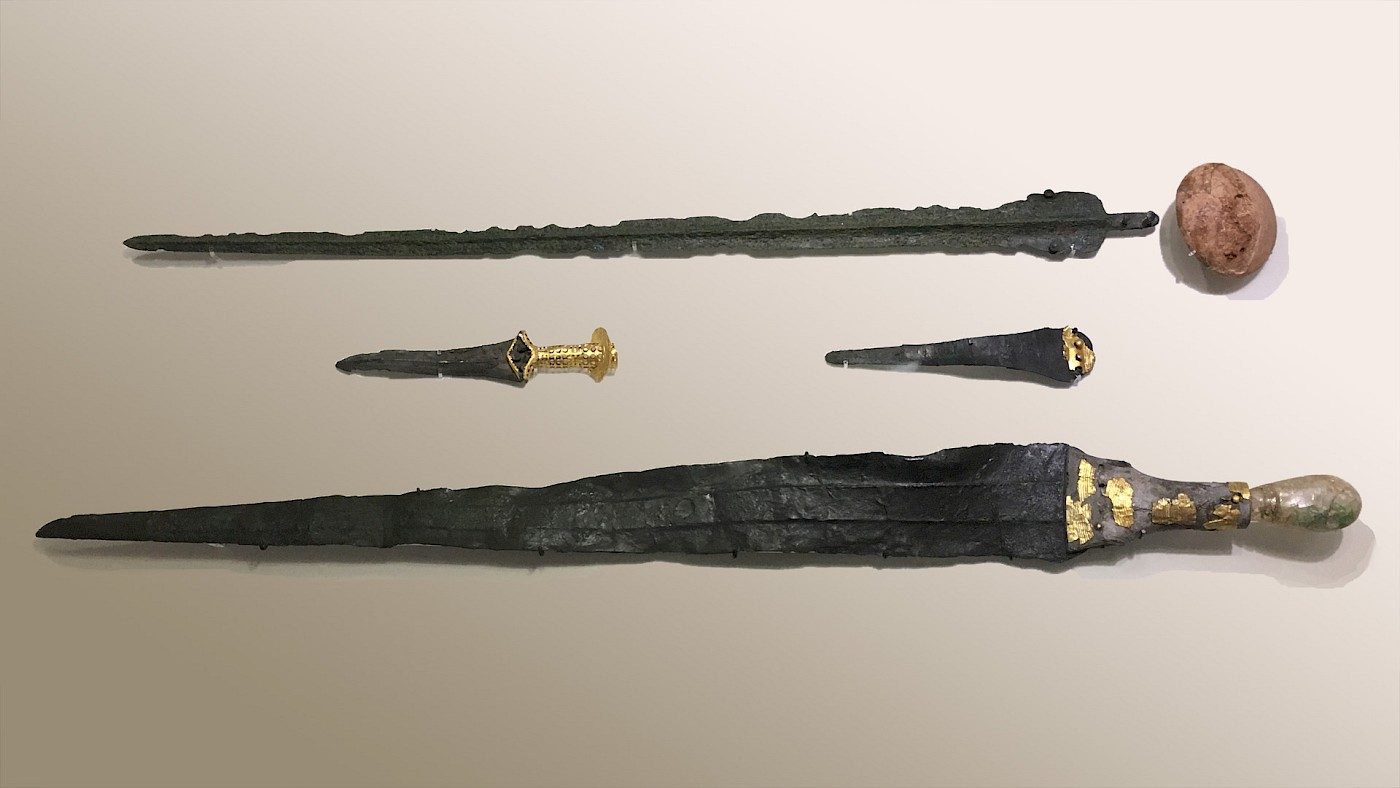
The main point of the story of Atlantis in Plato’s dialogues is that it fought a war against Greece but was then defeated. So, how does this fit the historical reality of the Minoans?
First of all, let us clarify what Plato’s account claims. Atlantis supposedly conquered all of Libya (that is, North Africa) as far as Egypt, and all of Europe as far as Tyrrhenia (on the western side of Italy). Crete occupies an approximately central position between those two locations.
Archaeology has shown that Minoan trade extended as far as Italy to the west, and they had strong links to the Egyptians as well. There is also evidence that their trading empire extended to Libya to the south.
Although there is no evidence that the Minoans ever actually tried to conquer this territory as in the story about Atlantis, the legend is still easily explained in light of the historical facts. In much later history, Greek records (even contemporary ones) portray the Etruscans as antagonistic pirates, when the evidence indicates that they were simply engaged in the same trading practices as the Greeks themselves, which were normal for the time.
Therefore, it is very likely that the idea of Atlantis trying to conquer that vast territory simply came from exaggerated reports about their domination of the trade in that region.
The Invasion of the Mycenaean Greeks
Nonetheless, the Minoans did fight an actual war against Greece. During the late-sixteenth or early-fifteenth centuries BCE, there is evidence of major upheaval and destruction of important centres across Crete.
Furthermore, we suddenly find the use of Linear A inscriptions replaced with the use of Linear B inscriptions, written in Mycenaean Greek rather than the language of the Minoans. The material culture of the inhabitants of Crete also shifts strongly towards the material culture of the Mycenaean Greeks at this same time.
Although some recent researchers have attempted to question this long-standing conclusion, this evidence clearly shows that the Mycenaean Greeks invaded and conquered Minoan Crete. Thus, the true history of the Minoans reflects the story of Atlantis in a crucial way, which the majority of theories about Atlantis candidates simply ignore.
The Timing of the War
Another significant detail from Plato’s description that is often ignored is that he provides the names of several individuals who were involved in it. He explains:
“The priests in their narrative of that war mentioned most of the names which are recorded prior to the time of Theseus, such as Cecrops, and Erechtheus, and Erichthonius, and Erysichthon.”
In other Greek records, concerning normal Greek mythology, Cecrops appears as the founder of Athens. The Parian Chronicle places him in the sixteenth century BCE. He had a son named Erysichthon, and the two figures named Erechtheus and Erichthonius appear to have originally been one figure, a king of Athens a few generations after Cecrops.
The correspondence between the chronology of these legendary Greek kings whose names appear here in the passage about the war against Atlantis and the timing of the historical war against Minoan Crete is remarkable.
The Minoan Eruption
The identification of Atlantis with the Minoan civilisation also provides a very convenient explanation for the sudden destruction of Atlantis. Recall that one of the main parts of Atlantis, the circular metropolis, seems to be identifiable as the island of Thera.
In the sixteenth century BCE (not the seventeenth century, contrary to some claims), the island of Thera experienced a devastating volcanic eruption. It was one of the largest eruptions in human history. The emptying of the magma chamber beneath the island caused huge portions of the island to literally collapse into the sea. Other portions of the island were blasted outwards into the sea.
This is extremely reminiscent of what Plato said about Atlantis ‘disappearing into the sea’ in ‘a single day and night of misfortune’.
The Shoal of Mud
In the Critas, Plato says that Atlantis ‘became an impassable barrier of mud to voyagers sailing from here to any part of the sea’.
As a result of the unfathomable quantity of ash and volcanic material blasted into the air from the eruption, the surface of the sea surrounding Thera would have become clogged with pumice, which floats on water. This may well have seemed like a shoal of mud impeding navigation through the sea.
Interestingly, Critias describes this as if it were still in existence. Bearing in mind that he is reciting the account from the Egyptian priest in Sais, it may well be that the Egyptians came to identify this ‘shoal of mud’, or pumice-filled region of the Mediterranean, with the semi-dry, semi-aquatic Nile Delta region, with its lakes and lagoons.
After all, they used the same term (‘Wadj-Wer’) for both that semi-aquatic area and the Mediterranean Sea just north of it, and it was within this ‘Wadj-Wer’ that Egyptian records placed the Minoans. Likely, traditions of the clogged-up sea in Wadj-Wer became mistakenly applied to the part of it which was still unnavigable, the northern Nile Delta region.
Conclusion
In summary, we can see that the Minoan civilisation fits Plato’s description of Atlantis in many remarkable ways. Once we put aside common but baseless assumptions about Plato’s geographical description of the island empire, we can see that it is perfectly compatible with the Minoans. Rather than placing Atlantis in the Atlantic Ocean, his description places it in the Mediterranean, relatively close to Egypt and Greece. The island with the large, rectangular plain was Crete, while the circular metropolis surrounded by concentric rings of land and sea can be identified with Thera. Numerous specific aspects of the Minoan culture can be identified with Atlantis, including their chief god, their technology, their construction work, and their war with Greece. The destruction of Atlantis can be associated, no doubt, with the dramatic eruption of Thera.
Sources
Woolf, Alex, The History of the World: The Story of Mankind from Prehistory to the Modern Day, 2017
Abulafia, David, The Mediterranean in History, 2003
Castleden, Rodney, Minoans: Life in Bronze Age Crete, 2002
Barca, Natale, Knossos, Mycenae, Troy: The Enchanting Bronze Age and Its Tumultuous Climax, 2023
Hart, George, The Routledge Dictionary of Egyptian Gods and Goddesses, 2005
https://archive.archaeology.org/0405/newsbriefs/cretans.html