Were the Americas the Real Atlantis?

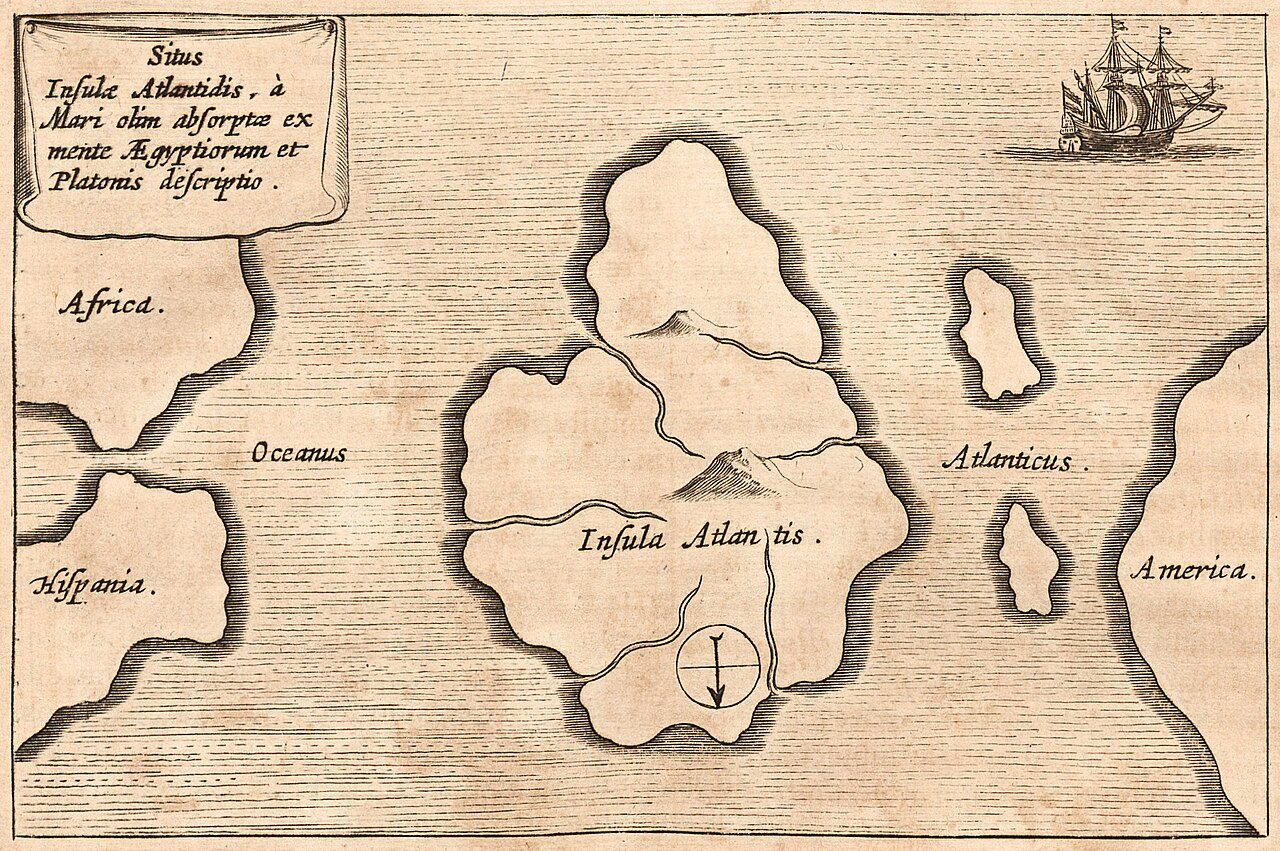
Among those who interpret Plato’s account of Atlantis as literally as possible, a popular theory is that Atlantis was actually a description of the Americas. Conversely, this is one of the most poorly regarded theories about Atlantis among scholars. What is the supposed evidence that is used in support of this theory? Does it really make sense? Or is it based more on wishful thinking? This article will examine the answers to those questions and others.
An Overview of the Americas Theory
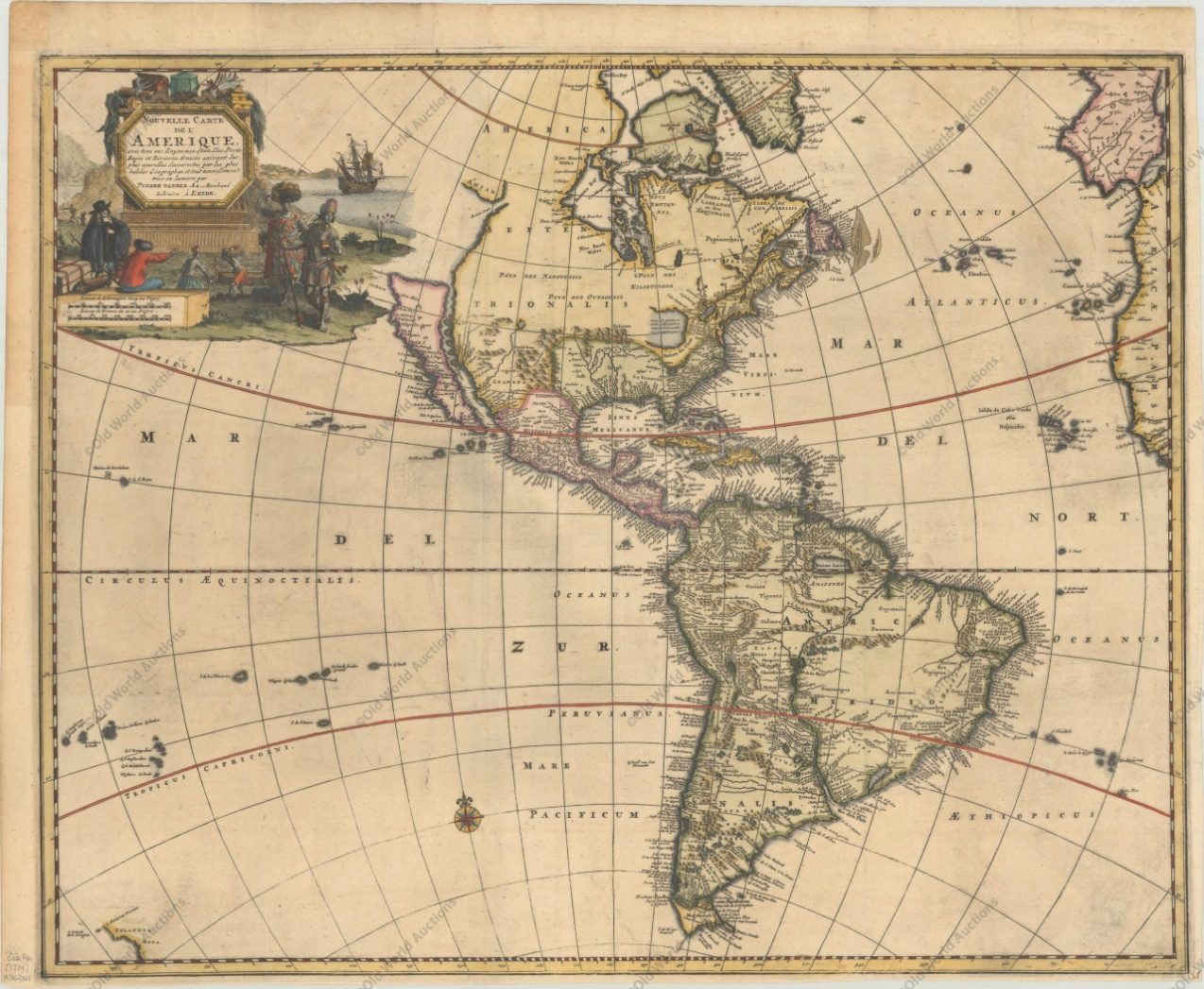
Put simply, this theory interprets the figures in Plato’s description literally. The massive figures for the size of Atlantis and its features, as well as its population, army and so forth, in Plato’s account are taken at face value. This being the case, Atlantis must have been a massive landmass. Since the Americas are the closest large landmass outside the Mediterranean, the logic goes that this must be the true Atlantis.
Some versions of this theory also take at face value the figure of 9000 years given for the time between the war against Atlantis and the Egyptian priest telling the story to Solon. It seems that most versions, however, reduce that to a much more realistic figure.
In any case, this theory argues that Atlantis really was a great empire which ruled over the Americas and attacked the Mediterranean by sending its army through the Strait of Gibraltar. This theory is also usually used to provide explanations for the movement of certain Native American peoples.
Arguments that Atlantis Was the Americas
There are a variety of arguments given in favour of the identification of Atlantis with the Americas. However, the theory is fundamentally rooted in the geography given by Plato.
The Location of Atlantis
Writing in the fourth century BCE, Plato explained that Atlantis was an island in the Atlantic Sea. This term, the ‘Atlantic Sea’, is traditionally translated ‘Atlantic Ocean’ due to the natural assumption that it was the Atlantic Ocean that Plato was referring to.
Seemingly confirming this, Plato described Atlantis as being ‘in front of the Pillars of Heracles’. This has traditionally been understood as meaning that it was beyond those pillars. Now, where were the Pillars of Heracles?
This was a term which was applied to a few different locations in antiquity, but the most common location designated by that expression was the Strait of Gibraltar. This is the entrance to the Mediterranean. Thus, the traditional understanding of Plato’s account has been that Atlantis was out in the Atlantic Ocean, beyond the Strait of Gibraltar.
Needless to say, the Americas are in the Atlantic Ocean, so this would appear to fit Plato’s description.
The Size of Atlantis
The idea that Atlantis was outside the Mediterranean is also seemingly confirmed by one well known statement from Plato’s description. In his initial description of Atlantis, he says the following:
“The island was larger than Libya and Asia put together.”
Most commentators understand that ‘Libya’ in this context refers to North Africa in general, and that ‘Asia’ here refers to Asia Minor rather than the entire continent of Asia. If Atlantis was bigger than North Africa and Asia Minor combined, then it simply cannot have fit inside the Mediterranean Sea. Therefore, it must have been outside, in the Atlantic Ocean.
In addition to this, it also means that Atlantis must have been an enormous landmass. In fact, this would make it the size of a continent, not a mere island.
Out in the Atlantic Ocean, there is only one landmass that fits this description: the Americas. Based on these key facts, many researchers have concluded that Atlantis simply must be identified with the Americas.
Early Identifications
In fact, this conclusion arguably seems so intuitive that there are records of people promoting this idea from quite soon after America was first discovered. In the 16th century, some six decades after the discovery of America, Francisco López de Gómara argued that it was Atlantis.
Just four years later, in 1556, historian Agustin de Zárate also argued for this identification. He presented the case that the Americas had originally been much larger, and that the continent had originally stretched right up to the Strait of Gibraltar. This extra portion had sunk into the ocean.
Impressive Settlements
A requirement that any Atlantis candidate must have to be taken seriously is the presence of an impressive civilisation. After all, Atlantis was said by Plato to have had a ‘great empire’. Plato goes to great lengths to describe its impressive buildings, harbours, and other forms of construction achievements.
Does America have anything that could fit these descriptions? It certainly does. Far from the outdated view of it being populated by wild savages, the Americas were filled with well-developed civilisations that created numerous impressive settlements.
Attention has been focused principally on Mesoamerica and the northern region of South America. There, we find powerful civilisations such as the Incas, the Aztecs, the Maya, and others. Of course, the Incas and the Aztecs formed their civilisations long after the time of Plato. Thus, many of the famous settlements from the indigenous cultures cannot have anything to do with Atlantis.
Pre-Platonic Civilisations
Yet, there were still some civilisations that preceded Plato’s era. The Mayan civilisation is one notable example. The Maya appear to have emerged as a notable civilisation in approximately 1750 BCE. They created large cities with dramatic temple complexes. Given that Plato describes the Temple of Poseidon on Atlantis as covering an area of 14,000 square meters, this is a potential match.
Additionally, the Olmec civilisation emerged in Mesoamerica in c. 1500 BCE. Like the Maya, the Olmecs created large religious centres with some impressive buildings, such as the Great Pyramid at La Venta, Tabasco. The idea of Atlantis having an ‘empire’ would fit both the Maya and the Olmec, both of whom expanded over a considerable area.
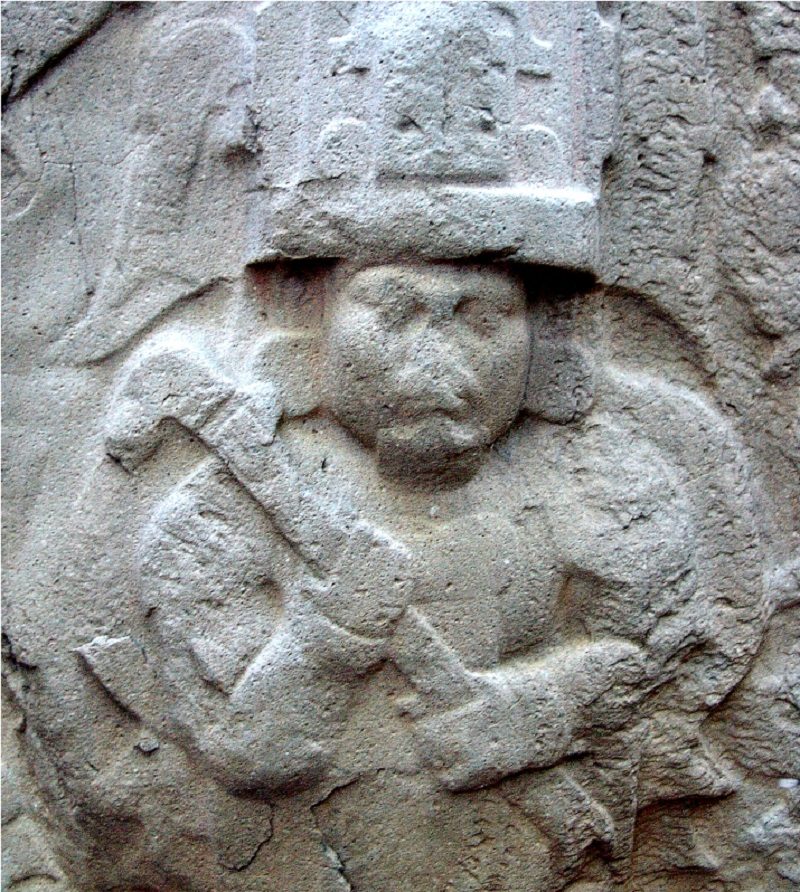
Plato also describes Atlantis as being a centre of international trade. This could definitely apply to certain civilisations within America. Regarding the Olmec culture, for example, there is evidence of long-range trade stretching hundreds of miles. Much the same could be said about the Mayan civilisation.
An Adjustment in Plato’s Figures
Nonetheless, there is an obvious problem with even these pre-Platonic civilisations. In Plato’s account of Atlantis, he describes how an Egyptian priest told Solon (in the early sixth century BCE) that the events involving Atlantis took place 9000 years ago. This would be about 11,600 BCE. All of these civilisations in America date to long after that era.
The explanation for this is usually given through one of two methods. The first method is to assume that when the Egyptian priest spoke of ‘years’, he actually meant ‘months’. This possibility is supported by the fact that some ancient Greek historians claimed that the Egyptians sometimes called months ‘years’.
If this is the case with the story about Atlantis, that would mean that the 9000 ‘years’ would actually be months, thus totalling just 750 years. This would place the events involving Atlantis in approximately 1340 BCE, the Late Bronze Age.
The second method to explain away Plato’s figure is to assume that ‘9000’ is a mistake for ‘900’. The best suggestion for how this could have occurred is that it has to do with the form of Egyptian writing used in Solon’s time. The figures for hundreds and thousands both had ‘tails’, with the tails on the hundreds being longer than those on the thousands. Yet, sometimes, the tails on the thousands were longer than normal, which could lead to confusion between hundreds and thousands.
Using the figure of 900 years, this would set the story of Atlantis in c. 1490 BCE, slightly earlier in the Late Bronze Age.
Objections to This Theory
There are a number of serious issues with the identification of Atlantis with the Americas. These issues involve geography, culture, history, and various specific problems.
Where Atlantis Was Really Located
There are a lot of issues with the conclusion that Atlantis was supposed to have been in the Atlantic Ocean. Yet, even if we accept this conclusion, what does Plato really say? He says that Atlantis was ‘in front of’ the Pillars of Heracles.
The term ‘in front of’ is translated from the Greek word ‘pro’. It is also translated ‘before’, as in “the island was before the Pillars of Heracles”. It suggests close proximity to the object used in connection with it. In this case, it suggests close proximity to the Pillars of Heracles.
As we saw before, this theory relies on the traditional understanding that the Pillars of Heracles were at the Strait of Gibraltar. If Plato had simply said that Atlantis was ‘beyond’ the pillars, then perhaps identifying it with America would be acceptable in terms of its location.
Yet, the fact that he clearly described Atlantis as ‘in front of’ the pillars shows that it cannot have been America, which is all the way over on the other side of the Atlantic Ocean.
A Suggested Explanation
As we saw earlier, Agustin de Zárate identified America with Atlantis. He was evidently aware of this issue involving America’s location. This is no doubt the reason why he argued that the continent of America originally stretched much further east, right up to the Strait of Gibraltar. The majority of the continent then sunk into the sea, leaving America as we know it today.
The problem with this argument is that modern geological science has utterly disproved such a notion of a sunken continent where the Atlantic Ocean is now. In fact, merely a close examination of a map demonstrates why this cannot be true.
The eastern coastline of South America matches the western coastline of Africa almost exactly. It is evident that these two continents were right up against each other at some point in the distant past. Thus, it is evident that what is now the eastern coast of South America has always been its eastern coast. There never was any great region of land extending out from the Americas into the Atlantic Ocean which has now sunk.
Inside the Mediterranean
Another issue with the idea that America could possibly be Atlantis is related to what Plato wrote about what was left after the subsidence of Atlantis. In Critias, Plato has Critias say to Socrates:
“[Atlantis] became an impassable barrier of mud to voyagers sailing from here to any part of the sea.”
It is unclear whether Critias was supposed to have been quoting the Egyptian priest in this passage, or whether he was supposed to have been using his own words. But in either case, both Greece and Egypt are in the Mediterranean. Therefore, when Critias said that Atlantis became an impassable barrier of mud to voyagers sailing from here to any part of the sea, that obviously means that it impeded sailing within the Mediterranean, somewhere within the region of Greece or Egypt, or both.
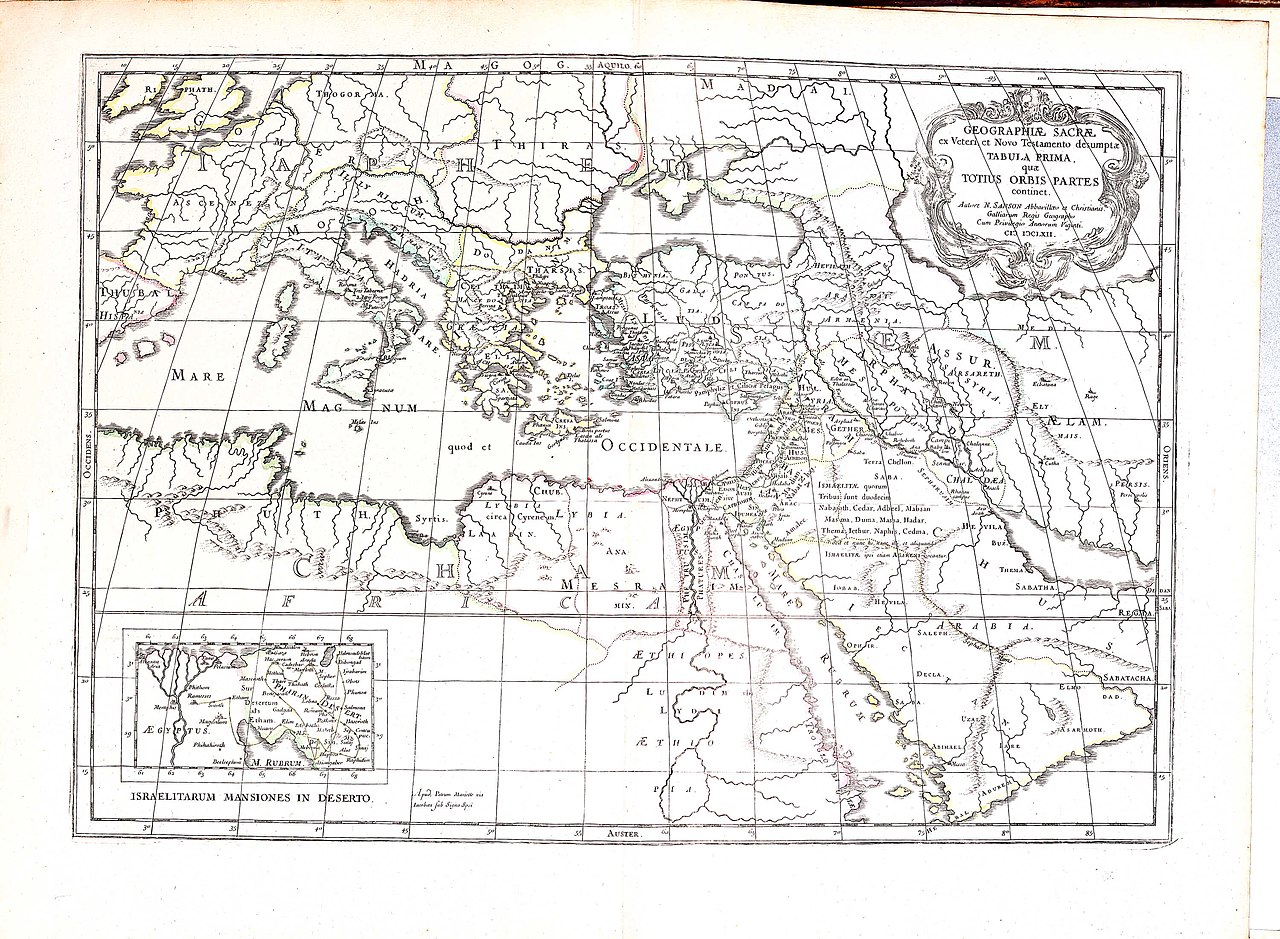
On the other hand, with the best will in the world, nothing that happened to the Americas could possibly have impeded voyagers sailing from Greece or Egypt to ‘any part of the sea’. It is simply too far away to be the Atlantis of Plato’s account.
The Size of the Americas
Another problem with this theory about America is, like the previous point, actually an issue with the traditional understanding of Atlantis in general. Based on Plato’s statement that Atlantis was ‘larger than Libya and Asia put together’, the Americas seem like a good fit. However, Plato actually used the word ‘meizon’, which means ‘greater’.
While this word can mean physically larger, it is often used to mean ‘greater’ in a general sense. Could it be that the Egyptian priest in Plato’s account was just trying to say that Atlantis was greater than the Libyans and the Asiatics, the two traditional enemies of the Egyptians?
The fact that physical size was never intended is evident from the fact that Plato’s account never uses the word for ‘continent’ when referring to Atlantis. This word does appear in the passage, as well as elsewhere in Plato’s writings, so it was definitely a word that Plato used. Yet, he never applied this term to Atlantis. Rather, he only ever called it an island.
If Atlantis really had been a landmass larger than North Africa and Asia Minor combined, it defies all explanation why he called it an island rather than a continent. The idea that a landmass as large as the Americas would be called an ‘island’ as opposed to a ‘continent’ is simply unbelievable and inconsistent with Plato’s language.
The Absence of a Naval Civilisation
Another problem is that, regardless of how developed the Olmec and Mayan civilisations may have been by c. 1500 BCE, there is no evidence that either of them were notable naval civilisations. To be sure, Plato did not simply describe trade in a general sense. He specifically presented Atlantis as being visited by merchant ships from distant lands.
It was the harbours of Atlantis in particular which were allegedly full of movement from the traders coming to visit it. According to Plato:
“The docks were full of triremes and naval stores.”
While there is evidence of the Maya making use of boats to engage in maritime trade along the coasts of the Caribbean and Gulf of Mexico, almost all of the evidence for this dates to long after the time of Plato. The Olmecs, for their part, preferred to travel along rivers rather than coasts.
War with Greece
Another major issue with the idea of Atlantis being the Americas is that the entire point of the Atlantis story in Plato’s Timaeus and Critas is that it fought a war against Greece. This is not a trivial detail that can be ignored, since it is the key reason for Plato writing about the account.
Now, could a civilisation based in the Americas engage in war against the Greeks? Placing this war in the Late Bronze Age, as most proponents of this theory do, there is simply no evidence of any notable contact between the Americas and the Mediterranean. In fact, the general consensus among academics is that there was no contact whatsoever in the Bronze Age.
Even if there were some isolated instances of contact, as some researchers argue might have occurred, this is a long way from facilitating an all-out war. Consider what Plato described:
“The men of Atlantis had subjected the parts of Libya within the Pillars of Heracles as far as Egypt, and of Europe as far as Tyrrhenia. This vast power, gathered into one, endeavoured to subdue at a blow our country and yours and the whole of the region within the straits; and then, Solon, your country shone forth… she defeated and triumphed over the invaders, and preserved from slavery those who were not yet subjugated, and generously liberated all the rest of us who dwell within the pillars.”
According to this, Atlantis attempted to wage war against the entire Mediterranean, Egypt and Greece included. How could we possibly conclude that any civilisation based in the Americas could have threatened the Mediterranean in the Bronze Age? Such a concept is simply not backed by any evidence, nor is it plausible in any way for the time period.
Conclusions
This theory might appear somewhat logical and intuitive at first, since America is the only landmass beyond the Strait of Gibraltar which is bigger than North Africa and Asia Minor combined. At first glance, it might appear to match the key elements of Plato’s account. Yet, when the evidence is looked at more closely, the case falls apart. Plato’s account makes it clear that Atlantis was supposed to have been right in front of the Pillars of Heracles, whereas the Americas are thousands of miles away. The idea that it was a continent-sized landmass is also contradicted by Plato consistently calling Atlantis an island. Furthermore, the idea that any civilisation in the Americas could have engaged in a war against the entire Mediterranean in the Bronze Age is completely incompatible with the evidence we have regarding that time period.
Sources
https://atlantipedia.ie/samples/america/
https://www.britannica.com/topic/Maya-people
https://www.nationalgeographic.org/encyclopedia/olmec-civilization/
https://www.britannica.com/topic/Olmec
https://www.nationalgeographic.com/history/article/who-were-the-maya