Timeless Myths Logo
Aphrodite Apollo Ares Artemis Athena Atlas Coeus Crius Cronus Demeter Dionysus Gaia Hades Hephaestus Hera Hermes Hestia Hyperion Iapetus Mnemosyne Oceanus Phobos Phoebe Poseidon Prometheus Rhea Tethys Themis Uranus Zeus
Bacchus Ceres Diana Juno Jupiter Mars Mercury Minerva Neptune Pluto Venus Vesta Vulcan
Amun Anubis Aten Atum Babi Bastet Bes Geb Hapi hathor heqet Horus Isis Khepri Khnum Khonsu Maat Nephthys Nut Osiris Ptah Ra Seshat Seth Shu Sobek Thoth
Alfheim Baldur Freya Freyr Frigg Heimdallr Helheim Idun Jotunheim Loki Nerthus Njord Odin Thor Tyr
Aengus Arawn Badb Brigid Cailleach Ceridwen Cernunnos Cu Chulainn Dagda Danu Gwydion Herne the Hunter Lugh Medb Morrigan Neit Nuada Taliesin Taranis
Chalchiuhtlicue Coatlicue Huitzilopochtli Mictlantecuhtli Mixcoatl Ometeotl Quetzalcoatl Tezcatlipoca Tlaloc Tonatiuh Xipe Totec Xochiquetzal Xolotl
Amaterasu Ame no Uzume Benzaiten Bishamonten Daikokuten Ebisu Fujin Fukurokuju Inari Izanagi Kagutsuchi Raijin Susanoo Tsukuyomi
Caishen Cangjie Dragon King Eight Immortals Erlang Shen Fuxi Guanyin Hou Yi Huxian Jade Emperor King Yama Leizi Lu-ban Mazu Nezha Nuwa Pangu Shennong Sun Wukong Xiwangmu Yue Lao Zhong Kui
Norse Classical Celtic Arthurian
Literature Stories Names
Aphrodite Apollo Ares Artemis Athena Atlas Coeus Crius Cronus Demeter Dionysus Gaia Hades Hephaestus Hera Hermes Hestia Hyperion Iapetus Mnemosyne Oceanus Phobos Phoebe Poseidon Prometheus Rhea Tethys Themis Uranus Zeus
Bacchus Ceres Diana Juno Jupiter Mars Mercury Minerva Neptune Pluto Venus Vesta Vulcan
Amun Anubis Aten Atum Babi Bastet Bes Geb Hapi hathor heqet Horus Isis Khepri Khnum Khonsu Maat Nephthys Nut Osiris Ptah Ra Seshat Seth Shu Sobek Thoth
Alfheim Baldur Freya Freyr Frigg Heimdallr Helheim Idun Jotunheim Loki Nerthus Njord Odin Thor Tyr
Aengus Arawn Badb Brigid Cailleach Ceridwen Cernunnos Cu Chulainn Dagda Danu Gwydion Herne the Hunter Lugh Medb Morrigan Neit Nuada Taliesin Taranis
Chalchiuhtlicue Coatlicue Huitzilopochtli Mictlantecuhtli Mixcoatl Ometeotl Quetzalcoatl Tezcatlipoca Tlaloc Tonatiuh Xipe Totec Xochiquetzal Xolotl
Amaterasu Ame no Uzume Benzaiten Bishamonten Daikokuten Ebisu Fujin Fukurokuju Inari Izanagi Kagutsuchi Raijin Susanoo Tsukuyomi
Caishen Cangjie Dragon King Eight Immortals Erlang Shen Fuxi Guanyin Hou Yi Huxian Jade Emperor King Yama Leizi Lu-ban Mazu Nezha Nuwa Pangu Shennong Sun Wukong Xiwangmu Yue Lao Zhong Kui
Norse Classical Celtic Arthurian
Literature Stories Names
  1. Classical Literature
    Greece Rome Other Ancient Civilizations Timeline of Classical Literature Alphabetical List of Authors Index of Individual Works Index of Important Characters Sources About Us
  2. Rome
    Catullus Vergil (Virgil) Horace Ovid Seneca the Younger Lucan Juvenal Pliny the Younger
  3. Catullus
    Passer, deliciae meae puellae (Catullus 2) Catullus 5 Miser Catulle, desinas ineptire (Catullus 8) Odi et amo (Catullus 85) Catullus Translations
  4. Miser Catulle, desinas ineptire (Catullus 8)

Miser Catulle, desinas ineptire (Catullus 8)

(Lyric Poem, Latin/Roman, c. 65 BCE, 19 lines)

Introduction

“Miser Catulle, desinas ineptire” (“Wretched Catullus, you should cease to be useless”) is a lyric poem by the Roman poet Catullus, often referred to as “Catullus 8” or “Carmina VIII” for its position in the generally accepted catalogue of Catullus’ works. The poem dates from around 65 BCE and describes Catullus’ misery and sadness after being rejected by his lover, Lesbia, and his more or less firm resolve to come to terms with his loss and to move on.
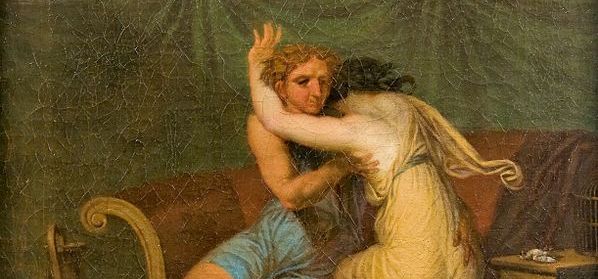
Catullus and Lesbia

Catullus and Lesbia

Synopsis

The poet reproaches himself for his silliness in clinging to a love which has clearly run its course. He describes how wonderful his love was while it lasted, but then states baldly she no longer wants him. He vows to be strong and resolute and not to chase after her, and tries to console himself that she will come to regret her decision. He imagines that no-one will now want to see her and love her, but ends by steeling himself again to endure his own misery and to remain steadfast in his resolve.

Analysis

Although the poem is addressed throughout to Catullus himself, and the name of his paramour is nowhere mentioned, the subject is clearly his failed love affair with Lesbia, an alias Catullus uses in many of his poems for Clodia, the wife of the eminent Roman statesman, Clodius.

The use of the choliambic metre (also known as limping, lame or halting iambic, for the way it brings the reader down on the wrong “foot” by reversing the stresses of the last few beats) creates a broken uneven effect, mimicking the dead end of Catullus’ thoughts.
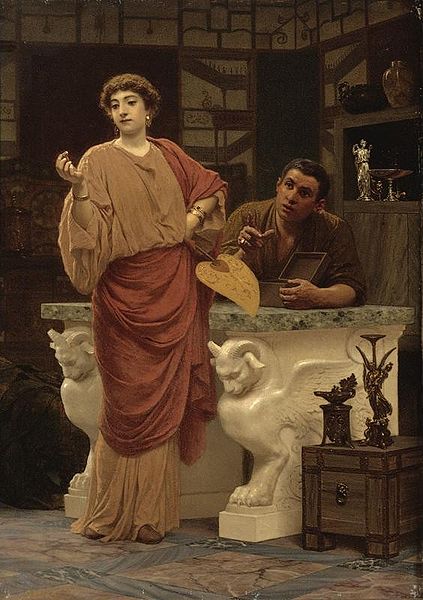
Lesbia and Catullus

Lesbia and Catullus

The first word of the poem, “miser”, is a favourite word and self-description of Catullus’. It can be translated as “miserable”, “wretched” or “unhappy”, but also as “love-sick”, which perhaps creates a tone nearer that intended by Catullus in the poem. The final word of the poem, “obdura” (“endure”), also used in lines 11 and 12, is a blunt imperative as Catullus tries to snap himself out of his misery.

Thus, the poem moves through a progression from Catullus’ utter dejection at his abandonment by Lesbia, through a middle section where he remembers some of the good things in life (which he reasons must still exist) and his recognition that things have inexorably changed, then a phase where he expresses his anger and frustration at Lesbia, and finally his resolve to overcome his despondency and move on. In the end, Catullus the rational poet becomes ascendant over Catullus the irrational lover.

However, the repeated and exaggerated use of the rhetorical questions towards the end of the poem in lines 15 – 18 (which also lends a fast, somewhat flustered tempo to this section of poem, perhaps reflecting the state of mind of the speaker), actually appears to be trying to bait Lesbia into taking him back, suggesting that he has not truly given up. Therefore, it seems that he actually cannot help himself any more than he could at the beginning of the narrative, and the final “obdura” comes across as less convincing and sadder than the earlier one.

Resources

  • Latin original and literal English translation (WikiSource): http://en.wikisource.org/wiki/Catullus_8

  • Audio reading of the original Latin (Classical Latin):http://jcmckeown.com/audio/la5103d1t07.php

By Timeless Myths

Catullus:

  • • Passer, deliciae meae puellae (Catullus 2)
  • • Catullus 5
  • • Miser Catulle, desinas ineptire (Catullus 8)
  • • Odi et amo (Catullus 85)
  • • Catullus Translations
Miser Catulle, desinas ineptire (Catullus 8)

Miser Catulle, desinas ineptire (Catullus 8)

(Lyric Poem, Latin/Roman, c. 65 BCE, 19 lines)Introduction “Miser Catulle, desinas ineptire” (“Wretched Catullus, you should cease to be useless”) is a lyric poem by the Roman poet Catullus, often referred to as “Catullus 8” or “Carmina VIII” for ...

October 25th, 2024 • Timeless Myths
Timeless Myths

Exploring mythology and legends from around the world.

Explore Myths

All Stories Characters All Articles Search Site Map

Mythologies

Norse Mythology Classical Mythology Celtic Mythology Arthurian Legends Mythology Gods Ancient Literature

About Us

Introduction About Jimmy Bibliography FAQs Retro Version

Resources

Timeless Myths All Stories All Articles Characters
© 1999-2026 Timeless Myths • Copyright • Privacy Policy • Cookie Policy • Contact
Follow us: