Timeless Myths Logo
Aphrodite Apollo Ares Artemis Athena Atlas Coeus Crius Cronus Demeter Dionysus Gaia Hades Hephaestus Hera Hermes Hestia Hyperion Iapetus Mnemosyne Oceanus Phobos Phoebe Poseidon Prometheus Rhea Tethys Themis Uranus Zeus
Bacchus Ceres Diana Juno Jupiter Mars Mercury Minerva Neptune Pluto Venus Vesta Vulcan
Amun Anubis Aten Atum Babi Bastet Bes Geb Hapi hathor heqet Horus Isis Khepri Khnum Khonsu Maat Nephthys Nut Osiris Ptah Ra Seshat Seth Shu Sobek Thoth
Alfheim Baldur Freya Freyr Frigg Heimdallr Helheim Idun Jotunheim Loki Nerthus Njord Odin Thor Tyr
Aengus Arawn Badb Brigid Cailleach Ceridwen Cernunnos Cu Chulainn Dagda Danu Gwydion Herne the Hunter Lugh Medb Morrigan Neit Nuada Taliesin Taranis
Chalchiuhtlicue Coatlicue Huitzilopochtli Mictlantecuhtli Mixcoatl Ometeotl Quetzalcoatl Tezcatlipoca Tlaloc Tonatiuh Xipe Totec Xochiquetzal Xolotl
Amaterasu Ame no Uzume Benzaiten Bishamonten Daikokuten Ebisu Fujin Fukurokuju Inari Izanagi Kagutsuchi Raijin Susanoo Tsukuyomi
Caishen Cangjie Dragon King Eight Immortals Erlang Shen Fuxi Guanyin Hou Yi Huxian Jade Emperor King Yama Leizi Lu-ban Mazu Nezha Nuwa Pangu Shennong Sun Wukong Xiwangmu Yue Lao Zhong Kui
Norse Classical Celtic Arthurian
Literature Stories Names
Aphrodite Apollo Ares Artemis Athena Atlas Coeus Crius Cronus Demeter Dionysus Gaia Hades Hephaestus Hera Hermes Hestia Hyperion Iapetus Mnemosyne Oceanus Phobos Phoebe Poseidon Prometheus Rhea Tethys Themis Uranus Zeus
Bacchus Ceres Diana Juno Jupiter Mars Mercury Minerva Neptune Pluto Venus Vesta Vulcan
Amun Anubis Aten Atum Babi Bastet Bes Geb Hapi hathor heqet Horus Isis Khepri Khnum Khonsu Maat Nephthys Nut Osiris Ptah Ra Seshat Seth Shu Sobek Thoth
Alfheim Baldur Freya Freyr Frigg Heimdallr Helheim Idun Jotunheim Loki Nerthus Njord Odin Thor Tyr
Aengus Arawn Badb Brigid Cailleach Ceridwen Cernunnos Cu Chulainn Dagda Danu Gwydion Herne the Hunter Lugh Medb Morrigan Neit Nuada Taliesin Taranis
Chalchiuhtlicue Coatlicue Huitzilopochtli Mictlantecuhtli Mixcoatl Ometeotl Quetzalcoatl Tezcatlipoca Tlaloc Tonatiuh Xipe Totec Xochiquetzal Xolotl
Amaterasu Ame no Uzume Benzaiten Bishamonten Daikokuten Ebisu Fujin Fukurokuju Inari Izanagi Kagutsuchi Raijin Susanoo Tsukuyomi
Caishen Cangjie Dragon King Eight Immortals Erlang Shen Fuxi Guanyin Hou Yi Huxian Jade Emperor King Yama Leizi Lu-ban Mazu Nezha Nuwa Pangu Shennong Sun Wukong Xiwangmu Yue Lao Zhong Kui
Norse Classical Celtic Arthurian
Literature Stories Names
  1. Classical Literature
    Greece Rome Other Ancient Civilizations Timeline of Classical Literature Alphabetical List of Authors Index of Individual Works Index of Important Characters Sources About Us
  2. Greece
    Homer Hesiod Aesop Sappho Pindar Aeschylus Sophocles Euripides Aristophanes Menander Apollonius of Rhodes
  3. Euripides
    Alcestis Medea (Euripides) Heracleidae (Euripides) Hippolytus (Euripides) Andromache (Euripides) Hecuba (Euripides) The Suppliants Electra Heracles (Euripides) The Trojan Women Iphigenia in Tauris Ion Helen (Euripides) The Phoenician Women The Bacchae Orestes Iphigenia at Aulis Cyclops
  4. Cyclops
    Cyclops

Cyclops

(Tragicomedy, Greek, c. 408 BCE, 709 lines)

Introduction | Synopsis | Analysis | Resources

Introduction

"Cyclops" (Gr: "Kyklops") is a satyr play by the ancient Greek playwright Euripides, the only complete satyr play that has survived from ancient Greece. It is a comical burlesque-like play on the story of Odysseus' capture by and escape from the one-eyed giant Cyclops, Polyphemus, as described in Homer's "Odyssey". The date of its presentation is uncertain but may have been around 408 BCE (or possibly much earlier).

Synopsis

Dramatis Personae - Characters

  • SILENUS, old servant of the Cyclops

  • CHORUS OF SATYRS

  • ODYSSEUS

  • THE CYCLOPS (Polyphemus)

On the voyage home from the Trojan War, Odysseus and his crew have lost their way and make a stop at Mount Aetna in Sicily, which is inhabited by the race of primitive one-eyed giants known as the Cyclops. They encounter the satyrs (who make up the Chorus of the play) and their drunken father Silenus, who have been enslaved by one particular Cyclops (Polyphemus from "The Odyssey", although he is referred to merely as "The Cyclops" throughout).
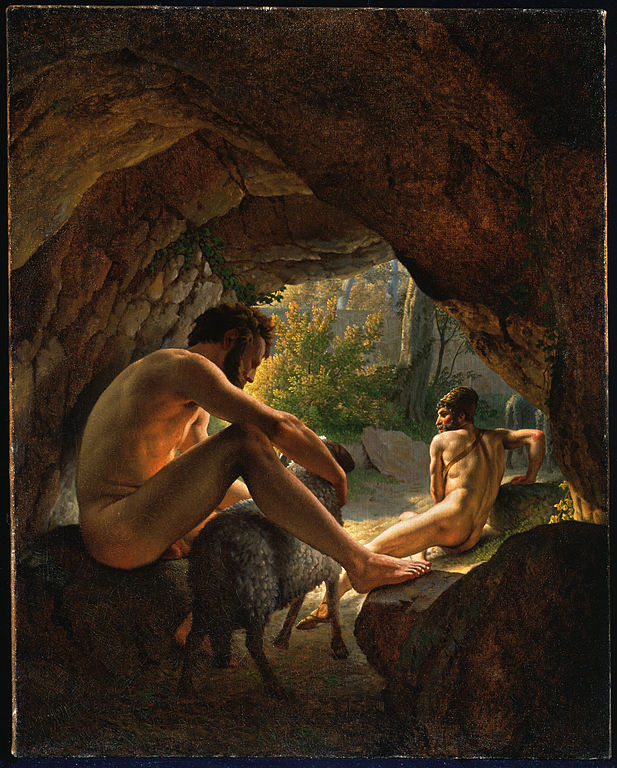
Ulysses fleeing the cave of Polyphemus

Ulysses fleeing the cave of Polyphemus

Odysseus offers to trade wine to Silenus in return for food for his hungry crew and, despite the fact that the food is not his to trade, the servant of Dionysus cannot resist the promise of more wine. When the Cyclops arrives, Silenus is quick to accuse Odysseus of stealing the food, swearing on all the gods and the satyrs' lives that he is telling the truth.

Despite the efforts of a younger and more modern satyr to make the truth known, the angry Cyclops herds Odysseus and his crew into his cave and begins to devour them. Appalled by what he has witnessed, Odysseus manages to escape and hatches a scheme to get the Cyclops drunk and then burn out his single eye with a giant poker.

The Cyclops and Silenus drink together, trying to outdo each other in their efforts. When the Cyclops is well and truly drunk, he steals Silenus away to his cave (presumably for sexual gratification), and Odysseus sees the opportunity to execute the next phase of his plan. The satyrs offer to help, but then chicken out with a variety of absurd excuses when the time actually comes, and the annoyed Odysseus gets his crew to help instead. Between them, they succeed in burning out the Cyclops' eye.
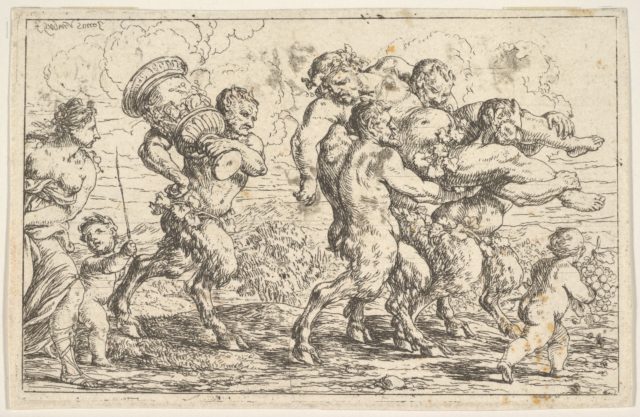
Three satyrs carrying the drunken Silenus

Three satyrs carrying the drunken Silenus

The blinded Cyclops screams that he has been blinded by "No-one" (the name Odysseus gave on their first meeting) and the satyrs make fun of him. However, the egotistical Odysseus blurts out his real name by mistake and, although he and his crew manage to make their escape, the rest of the troubles Odysseus faces on his voyage home are due to this act, since the Cyclops was a child of Poseidon.

Analysis

Although the play has some intrinsic merits, its main interest for modern readers is as the sole remaining complete specimen of the tradition of satyric drama. Satyr plays (not to be confused with "satires") were an ancient Greek form of irreverent tragicomedy, similar to the modern-day burlesque style, featuring a Chorus of satyrs (the half-man half-goat followers of Pan and Dionysus, who roamed the woods and mountains) and based on themes of Greek mythology, but containing themes of drinking, overt sexuality, pranks and general merriment.

Satyr plays were presented as a lighthearted follow-up after each trilogy of tragedies at the Athenian Dionysia drama festivals to release the tragic tension of the preceding plays. The heroes would speak in tragic iambic verse, apparently taking their own situation very seriously, as contrasted with the flippant, irreverent and obscene remarks and antics of the satyrs. The dances used were usually characterized by violent and rapid movements, parodying and caricaturing the noble and graceful dances of the tragedies.
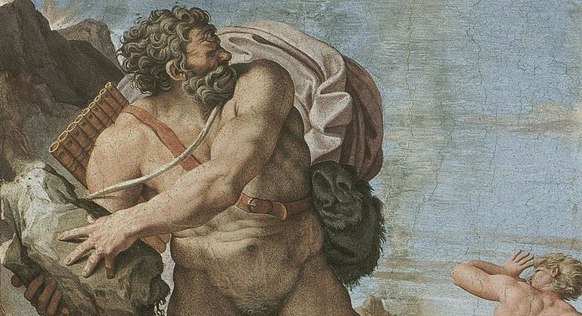
Cyclops Polyphemus by Annibale Carracci

Cyclops Polyphemus by Annibale Carracci

The story is taken directly from Book IX of Homer's "Odyssey", the only innovation being the presence of Silenus and the satyrs. The discordant elements of the brave, adventurous and resourceful warrior Odysseus, the gross and brutal Cyclops, the drunken Silenus and the cowardly and licentious satyrs are combined by Euripides with rare skill into a work of harmonious beauty.

Resources

  • English translation by E. P. Coleridge (Internet Classics Archive): http://classics.mit.edu/Euripides/cyclops.html

  • Greek version with word-by-word translation (Perseus Project): http://www.perseus.tufts.edu/hopper/text.jsp?doc=Perseus:text:1999.01.0093

By Timeless Myths

Euripides:

  • • Alcestis
  • • Medea (Euripides)
  • • Heracleidae (Euripides)
  • • Hippolytus (Euripides)
  • • Andromache (Euripides)
  • • Hecuba (Euripides)
  • • The Suppliants
  • • Electra
  • • Heracles (Euripides)
  • • The Trojan Women
  • • Iphigenia in Tauris
  • • Ion
  • • Helen (Euripides)
  • • The Phoenician Women
  • • The Bacchae
  • • Orestes
  • • Iphigenia at Aulis
  • • Cyclops
Cyclops

Cyclops

The Cyclops was a giant who had a single large eye on their forehead. Some were friendly to gods and men, while others were hostile. The original Cyclopes were the sons of Uranus and Gaea. Originally there were only three Cyclops named Arges, Bron...

June 1st, 2000 • Jimmy Joe
Polyphemus in the Odyssey: The Strong Giant Cyclops of Greek Mythology

Polyphemus in the Odyssey: The Strong Giant Cyclops of Greek Mythology

Polyphemus in the Odyssey was described as a one-eyed giant monster who played an important role in Greek mythology. His appearance may be very different from ours, but like any ordinary human, he knows how to fall in love. Let's discover how, and...

February 16th, 2024 • Ancient Literature
Odyssey Cyclops: Polyphemus and Gaining the Sea God's Ire

Odyssey Cyclops: Polyphemus and Gaining the Sea God's Ire

The Odyssey cyclops or Polyphemus is known as the son of the god of the sea, Poseidon. Like his father, the demigod is strong and holds deep resentment to those who do him wrong. The giant is written as a violent, cruel, and selfish being, killing...

February 16th, 2024 • Ancient Literature
Giant 100 Eyes – Argus Panoptes: Guardian Giant

Giant 100 Eyes – Argus Panoptes: Guardian Giant

Giant 100 Eyes – Argus Panoptes, as stated was a giant with 100 eyes in Greek mythology. The mythical giant with 100 eyes was also very famous because he was the servant of Hera and the guardian of Io, the love interest of Zeus. In the end, Hermes...

February 16th, 2024 • Ancient Literature
The Odyssey

The Odyssey

(Epic Poem, Greek, c. 725 BCE, 12,110 lines)Introduction “The Odyssey” (Gr: “Odysseia”) is the second of the two epic poems attributed to the ancient Greek poet Homer (the first being “The Iliad”), and usually considered the second extant work of ...

January 1st, 2025 • Ancient Literature
Giants

Giants

Genealogy Giants and MonstersFact and Figures AstronomyRelated Pages Mythical Creatures

June 1st, 2000 • Jimmy Joe
Campe

Campe

In the Creation myth, Campe was a monster whom Cronus set to guard the Hundred-Handed and the Cyclops in Tartarus. In order to free the Hundred-Handed and the Cyclopes, Zeus had to kill Campe. Apollodorus was the only author who gave a name to Cam...

June 1st, 2000 • Jimmy Joe
Oedipus

Oedipus

(Tragedy, Latin/Roman, c. 55 CE, 1,061 lines)Introduction “Oedipus” is a tragedy by the Roman playwright Seneca the Younger, written around 55 CE. It is a retelling of the story of the unlucky King Oedipus, who finds out that he has unknowingly ki...

October 25th, 2024 • Timeless Myths
Galatea

Galatea

A minor sea goddess. Galatea was the daughter of Nereus and Doris. She resided somewhere around Sicily. Though, she had a lover named Acis, the Cyclops Polyphemus constantly wooed her. Acis was the son of Faunus and the nymph Symaethis, while Poly...

August 31st, 2002 • Jimmy Joe
Cichol

Cichol

A leader of the Fomorians during the invasion of Ireland by the Partholanians. The only source for Cichol comes from a single reference in the Lebor Gabála. At that time, the Fomorians were described as race of people with a horrible deformity. Ea...

November 3rd, 1999 • Jimmy Joe
Timeless Myths

Exploring mythology and legends from around the world.

Explore Myths

All Stories Characters All Articles Search Site Map

Mythologies

Norse Mythology Classical Mythology Celtic Mythology Arthurian Legends Mythology Gods Ancient Literature

About Us

Introduction About Jimmy Bibliography FAQs Retro Version

Resources

Timeless Myths All Stories All Articles Characters
© 1999-2026 Timeless Myths • Copyright • Privacy Policy • Cookie Policy • Contact
Follow us: